Printed version

21 Titles


All Books

La portada tiene un fondo liso en color morado oscuro, que transmite formalidad y sobriedad. Sobre este fondo destacan letras grandes en blanco y dorado para el título:  “USO DE” y “EN CHILE Y MÉXICO” en blanco, resaltando la neutralidad.  “HIPOCORÍSTICOS” en dorado, lo cual lo enfatiza como el eje central del libro.  En la parte inferior hay un diseño en forma circular creado con una nube de palabras (word cloud). Dentro de este círculo se ven numerosos nombres hipocorísticos (sobrenombres o diminutivos) en distintos tamaños y direcciones. Entre los más grandes y notorios se leen: Nacho, Chabela, Pepe, Mari, Beto, Pancho, Eli, Gabi. Otros más pequeños como: Licha, Tita, Rosi, Dani, Memo, Polo, Cande, Toño, Jabo, Lalo. El tamaño de cada palabra parece simbolizar su frecuencia o relevancia en el uso.

Use of hypocoristics in Chile and Mexico

Lucila Gutiérrez Santana (Autor/a)
September 26, 2025
Cover of the book 'The Right to Be Scientists', featuring an illustration of a female profile surrounded by formulas, nature, and scientific symbols. Title and authors from the University of Colima.
Volumen 1

The Right to Be Female Scientists: A Collection of Essays. Volume 1

María Elena Tejeda Yeomans, Dulce María Vargas Bracamontes, Julia Tagüeña Parga, Ana Júlia Silveira Mizher, Carmen Dagmar Mariaca Hajducek, Elizabeth Ivonne Rovere, Isabel Cordero Carrión, Maura Elizabeth Ramírez Quezada, Olga Olinca Galván de la Cruz, Sara Guillermina Centeno Leija, Xyoli Pérez Campos (Autor/a)
July 4, 2025
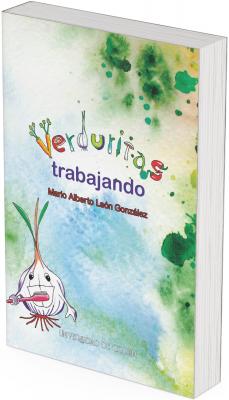
The cover image features a watercolor background in soft, cheerful tones ranging from green to blue, with scattered splashes of vibrant green, yellow, and orange, creating a sense of vibrant, spontaneous nature. The word "Verduritas" (Little Vegetables) appears at the top, written with letters formed from vegetable shapes. For example, the letter "V" is made of carrots with leaves, the "E" resembles a chili pepper, the "D" a tomato or some other round vegetable, the "U" is composed of scallions, the "R" a bell pepper, and so on. Each letter has a different color and shape, lending a playful and childlike feel. Below this word, in large, straight, purple letters, appears the verb "trabajando" (working), which balances the visual playfulness of the title with a more serious and clear tone. Finally, the author's name, Mario Alberto León González, is at the bottom of the title, written in bright red.

Little Veggies at Work

Mario Alberto León González (†) (Autor/a)
May 15, 2025
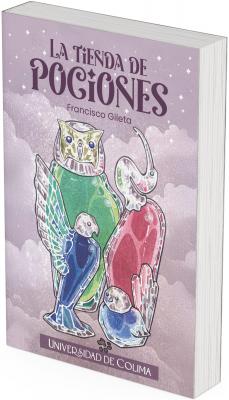
The cover features a light lavender background with a design reminiscent of a magical night, decorated with small white stars scattered across the sky. The top center displays the book's title in large, decorative, dark purple letters: "The Potion Shop," followed directly below in smaller print by the author's name: Francisco Gileta. In the center of the image are three large bottles shaped like fantastical animals, rendered in a style that blends children's illustration and decorative art. The first bottle, on the left, is green and shaped like an owl. It has large eyes and wings that appear to sprout from the bottle, with blue accents. The central bottle is red and represents an ibis, a bird with a long, slender neck. Its shape suggests movement and fantasy. The third bottle, on the right, is blue and has a lower, more rounded design, like a penguin or other small bird, with open wings and expressive eyes. Each bottle has shimmering white lines that mark the edges, creating a glowing effect, as if they were made of enchanted glass. At the bottom, centered, appears the logo and name of the publisher: "University of Colima", in white letters on a purple stripe.

The Potion Shop

Francisco Gileta (Autor/a)
April 3, 2025
The cover features a completely abstract and artistic design, with an explosion of colors and visual textures that evoke movement, depth, and emotion, very much in the style of an expressionist painting. There are no human figures or defined landscapes; everything is composed of brushstrokes and patches of color that blend and contrast. At the top, blues, violets, and pinks dominate, with thin vertical lines that seem to fall like pigment rain or streams of water cascading from above. In the middle section, a range of greens, turquoises, and whites blend together, suggesting a transition to a lighter texture, like sea foam. The bottom is occupied by a band of deep black, which could symbolize solid ground, ink, or the mystery of the ocean's depths. This pictorial background suggests a visual metaphor for the cultural and emotional diversity of the Mexican Pacific regions, which gives rise to the poetry explored in the book.

Regional Literatures: A Glimpse to the Poetry of the Mexican Pacific

Ada Aurora Sánchez Peña, Marta Piña Zentella (Autor/a); Carlos Alberto Ramírez Vuelvas, Dante Arturo Salgado González, Erick Zapién García , Francisco Fernando Meza Sánchez , Krishna Naranjo Zavala, Gloria Ignacia Vergara Mendoza, Jorge Alfonso Souza Jauffred, Godofredo Olivares Cortés, María Elizabeth Nuño Plascencia, Silvia Quezada Camberos, Santos Javier Velázquez Hernández, Ramón Moreno Rodríguez, Mehdi Mesmoudi (Autor de capítulo)
April 1, 2025
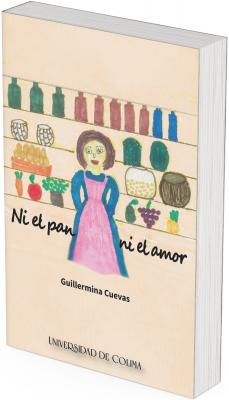
The cover features a childlike or naive illustration style—simple, colorful, and with deliberately innocent lines—as if drawn with crayons or colored pencils. Everything is hand-drawn with a warm and nostalgic feel. In the center of the image is a woman with light brown hair, round glasses, a smiling face, and rosy cheeks. She wears a pink apron over a blue dress, suggesting she is working, possibly in a shop or kitchen. The woman stands in front of a backdrop of shelves containing various household items and food products: bottles, baskets, fruits and vegetables such as carrots, tomatoes, grapes, pineapple, eggs, and herbs. Earthenware jugs, jars, and canisters are also visible, arranged as in a small grocery store or an old-fashioned kitchen.

Neither Bread nor Love

Guillermina Cuevas Peña (Autor/a)
February 14, 2025
The cover features a light blue background with white clouds, giving the impression of a clear sky. In the center is a small black and white dog with pink ears, seemingly resting on a gray surface. Its expression is tender and somewhat melancholic, with dark eyes and a pink muzzle. Above the dog is a speech bubble containing a black scribble, suggesting the animal has confused thoughts, worries, or a story to tell.

Gala, Samuel and their home

Sofía Lorena Orozco Torres (Autor/a)
January 30, 2025
The cover art has a science fiction or fantasy style, combining cosmic and terrestrial elements. In the center of the image is a female figure with her back to the viewer, wearing a light-colored dress and with her hair loose. She stands on a rocky, arid landscape, with a small stream reflecting the light around her. In front of her is a luminous vortex with reddish and orange hues, its circular lines suggesting an interdimensional tunnel or a portal to another reality. Within the vortex are points of light resembling stars or moving, glowing particles. From above, beams of white light descend upon the scene, as if from an opening in the sky or a source of superior energy. The environment blends natural and futuristic elements, suggesting a setting on another planet, a parallel reality, or an unknown world.

Trapped in Gea

Gabriela Santana (Autor/a)
January 28, 2025
The cover features a dark green background, conveying seriousness, institutionalism, and respect. In the center is a black and white photograph of a man in military uniform, indicating his affiliation with the army. The man has a serious face, with a thin mustache and a determined expression. His uniform includes a cap with military insignia and metal buttons on his jacket, suggesting a high rank within the military hierarchy. The photograph has a classic style, reminiscent of mid-20th-century imagery. On the left side of the image, the name "ALBERTO CONSEJO SÁENZ" is written in vertical black letters, reinforcing the importance of the figure. Just below the photo, white text provides context about Alberto Consejo Sáenz: "Military physician, co-founder of the University of Colima and the Mexican Social Security Institute."

Alberto Consejo Sáenz

José Manuel González Freire (Autor/a)
January 27, 2025
The cover features a solid blue background, conveying a sense of seriousness, clarity, and professionalism. At the center of the image is a creative and symbolic visual element: a light bulb, but instead of a conventional metal base, its bottom transforms into a pencil point. This image combines two key symbols: the light bulb, representing ideas, creativity, and intellectual enlightenment; and the pencil, symbolizing writing, learning, and spelling accuracy. The title "Spelling" is in large, bold, white letters, with the word "in motion" just below in a smaller typeface, but maintaining the same style. This suggests dynamism and evolution in learning spelling.

Spelling in Motion

José Manuel González Freire (Autor/a)
January 20, 2025
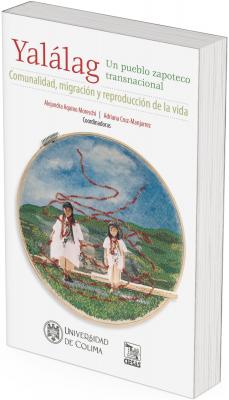
The cover features a clean, elegant white background, allowing the central image and text to stand out clearly. At the top, the title "Yalálag" is in large, red letters, while the subtitle is in a green tone, evoking the colors of the earth and nature—key elements in Zapotec culture. In the center of the cover is a highly symbolic and artisanal image: an embroidery frame with a scene that combines photography and hand embroidery. Within the frame, a landscape of mountains and a blue sky with clouds is depicted with textured embroidery in shades of green and blue. At the center of this composition are two girls dressed in traditional Zapotec clothing: embroidered white huipiles, light-colored skirts, and necklaces of red beads. These images appear to be photographs cut out and incorporated into the embroidery, reinforcing the message of identity, community, and tradition. Above the girls and along the frame, a spiral of red beads connects different points of the design. This can symbolize migration, the connection between communities, and the union of Zapotec families despite the distance.

Yalálag. A transnational Zapotec town.: Communality, migration and reproduction of life

Joel Aquino Maldonado, Nelson Diego, Luis Vargas, Gladys García Canseco, Francisco Aquino, Érica Maldonado, Carlos Diego, Carlos Aquino, Plutarco Aquino Zacarías, Juana Vásquez Vásquez (Autor de capítulo); Alejandra Aquino Moreschi (Autor/a); Aristarco Aquino Solís (†), Norma Patricia Lache Bolaños, María Bertely Busquets (†), Lourdes Gutiérrez Nájera , Graciela Fabián Mestas , Gerardo Alatorre Frenk , Ana Daisy Alonso Ortiz (Autor de capítulo); Adriana Cruz-Manjarrez (Autor/a)
December 16, 2024
The cover has a light gray background with a texture that simulates paper or a rough material, giving it a serious and academic appearance. The title "AGE GROUPS" is in large, red capital letters, while "AND SOCIAL SCIENCES" is in green, creating a strong visual contrast. Within the title letters are photographs of people of different ages, representing various stages of life. The images within the letters show: Children and young people in the red section, symbolizing the early stage of life; adults in the green section, suggesting maturity and adulthood; and older people also in shades of green, reinforcing the age categorization within a sociocultural approach. Below the title, the subtitle "Age as a Sociocultural Marker and Category of Analysis" is in smaller, black letters, indicating the book's focus on how age is used as a social and analytical construct within the social sciences.

Age Groups and Social Sciences: Age as Sociocultural Labeling and Category of Analysis

Verónica Ramona Ruiz Arriaga, Amaury Fernández Reyes (Autor/a); Felipe Roboam Vázquez Palacios, María Alejandra Salguero Velázquez, Angélica Rodríguez Abad, Iris Rubi Monroy Velasco, José Guadalupe Rivera González (Autor de capítulo)
December 13, 2024
The cover features an illustration with soft, warm colors, created with a technique that resembles colored pencils or crayons, giving it a handcrafted, tender, and childlike style. The scene depicts a natural landscape with an orange sun setting on the horizon, painting the sky in shades of pink, lilac, orange, and blue, evoking a tranquil and peaceful sunset. In the foreground, two figures are shown from behind: an adult dressed in yellow with a wide-brimmed hat, who appears to be a mother or caregiver, and a little girl in a blue dress and pink hat, who clings tenderly to the adult's arm. Both are standing on a green meadow, watching the sunset. Beside them, on the ground, is a basket of laundry, suggesting they are returning from a picnic or some other activity together.

See you later, Mr. Sun: Tonaltzin satepan timotta

Heidi Juárez Robles (Autor/a)
December 13, 2024
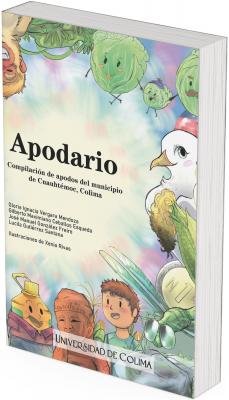
The cover features a colorful, cartoonish illustration with a playful and dynamic style. In the background, the sky has a watercolor effect with pastel shades of blue, pink, and yellow, evoking a sense of joy and nostalgia. The characters and objects illustrated on the cover appear to represent local nicknames transformed into animated figures, which aligns with the book's content. Among the highlighted elements are: anthropomorphized vegetables (lettuce with faces and mustaches), suggesting food-related nicknames; a white bird with an elegant gaze and a gold teardrop-shaped earring, which could represent a nickname linked to birds or wealth; a smiling child and an elderly woman wearing a rebozo, which could symbolize community figures; a yellow container with arms and a smiling face, suggesting a nickname related to everyday products or packaging; and a green insect (resembling a dragonfly) holding a Mexican peso coin, which could allude to a nickname based on money or the insect's appearance. The title "Apodario" is in black serif letters, lending a touch of formality to the playful design. Just below, the subtitle explains that it is a compilation of nicknames from the municipality of Cuauhtémoc, Colima, indicating that the book has a cultural and anthropological focus.

Nickname Guide: Compilation of Nicknames in the Municipality of Cuauhtémoc, Colima

Gloria Ignacia Vergara Mendoza, Gilberto Maximiano Ceballos Esqueda, José Manuel González Freire, Lucila Gutiérrez Santana (Autor/a)
November 27, 2024
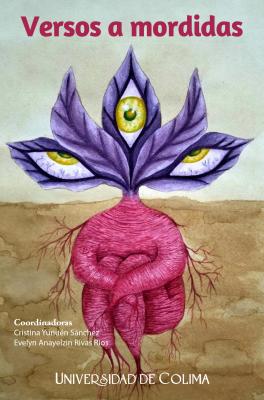
La portada presenta una ilustración surrealista y simbólica con un estilo artístico de acuarela.  En el centro de la imagen, hay una figura híbrida entre planta y ser vivo, que parece tener raíces enterradas en un suelo seco y agrietado. Su base es de color rojo intenso, con un aspecto orgánico similar a un corazón humano, con brazos entrelazados abrazándose a sí mismo, lo que transmite una sensación de autoprotección o encierro emocional.  De la parte superior de esta figura crecen hojas de tono morado oscuro con formas afiladas, y dentro de ellas hay ojos abiertos con pupilas amarillas, lo que da una impresión misteriosa e inquietante. Estos ojos parecen mirar en todas direcciones, sugiriendo un estado de vigilancia, introspección o múltiples perspectivas.  El fondo es un paisaje árido y desolado, con tonos ocres y marrones, lo que refuerza la sensación de soledad, lucha interna o un entorno hostil.  El título "Versos a mordidas" está en la parte superior en letras grandes, gruesas y de color rojo oscuro, lo que lo hace llamativo y acorde con la intensidad de la imagen.

Verses in bites

Cristina Yunuén Sánchez , Evelyn Anayelzin Rivas Rios (Autor/a); Daniela Kristell Salazar Alvarez , Lizbeth Guadalupe Maldonado Pérez, Alejandro Eduardo China Tinoco, María Elizabeth Vázquez Galván, Mayra Esther Santos Aguirre, Fernanda del Rocio Amezquita Alvarez , Jennifer Estefanía Arreola Murguía, Alexandra Villa Rodríguez, Yulissa Sayuri Villalobos Rivera, Jade Vianey Riestra Ponce, José Carlos Fraga Cruz, Daniela Elizabeth Alfaro Zamora, Alida Flores Domínguez, Danna Noilani Cordova Rodríguez, Karla Valletzy Rincón Bejarano (Autor de capítulo)
November 27, 2024
The cover features a solid dark green background, conveying seriousness, elegance, and sobriety—characteristics befitting a work of academic and philosophical significance. At the top, a white frame with a black and red border stands out, its classic shape reminiscent of a commemorative plaque or institutional poster, emphasizing the importance of the content. Within this frame, the text is structured as follows: “Doctor Honoris Causa” in black, serif, capital letters, indicating that the author has been awarded this honorary title. “Luis García Montero” appears directly below, in a prominent font, highlighting the honoree's name. The book's title, “Masters of Our Own Conscience,” is in red capital letters, making it the most striking element of the design and emphasizing the work's central concept.

Honorary Doctor Luis García Montero: Owners of Our Own Conscience

Luis García Montero (Autor/a)
November 25, 2024
The cover features a clear, deep blue background, conveying spaciousness, freedom, and a sense of exploration. At the bottom, a photograph shows a person atop a rocky mountain, holding a Mexican flag waving in the wind. The person is dressed in red and black mountain gear, suggesting a feat of effort and personal achievement. In the center of the image is a rock with Korean inscriptions and the mountain's height (1708 m), indicating that the photograph was taken at a high point in South Korea. The title, "Mobility Experiences," is in large, white letters with a classic and elegant typeface, ensuring clarity and contrast against the blue background. Just below, the subtitle, "A Window to the World," is written in a white, handwritten font, adding a personal and dynamic touch and reinforcing the idea of ​​adventure and discovery.

Experiences in Mobility: A Window to the World

Ana Cecilia García Valencia, Gabriela Sánchez Alfaro, Daniel Augusto Peláez Osorio, José Antonio Juárez Velázquez, Edna Carolina Espinosa Covarrubias , Laura Daniela Velador Jiménez, Alejandra Elizabeth Barbosa Ureña , Beatriz Adriana Castro Magaña, Adriana Olivera Naranjo , Alexia Rodríguez de la Peña, Madai Amaya Renée Cortéz Telles , Axel Efraín Ortiz Reyes, Carlos Leonardo Arias Frías, Carmen Fabiola Chávez Santana, Dulce Carolina Barbosa Ureña, César Eduardo Rodríguez Soriano, Citlalli Rubí Rincón Munguía , Daniela Alejandra Torres López , Diana Marlene Salas Santana , José Eduardo Luquín Rodríguez , Itza Yunuen Jáuregui Ramírez, Josué López Serrano, Samantha Patricia Cervera Sánchez, Sara Torres Arias , Valerhia Alejandra Ceballos Villalobos, Ximena Trejo Martínez (Autor/a)
November 25, 2024
The cover has a warm, gold tone, with a textured background that gives the feeling of depth. In the central part, there is a woman with long dark hair, a white and gold accessories (earlets and a necklace with a heart-shaped charm). She is sitting on a wooden table and holds a red phone with both hands. Her expression is calm, friendly and thoughtful, with a slight smile. Behind it, there is a faded image of itself, but with a serious expression and a direct look at the viewer. This secondary image is translucent and in sepia tones, generating an effect of emotional duality.

The psychological dimension in caring for victims from the perspective of human rights: An interdisciplinary view from law and psychology

Dra. Silvia Rosa Sigales Ruíz, Dr. Enoc Francisco Morán Torres, Dr. César Augusto García Avitia (Autor/a); Dra. Carolina León Bastos , Valeria Maurilia Flores Hernández , Erika Vanessa Cárdenas Gómez , José Guadalupe Rivera García, Dra. Arianna Sánchez Espinosa, Dr. Álvaro Aguilar Martínez, Dr. Rodolfo Rangel Alcantar , Dr. Salvador Hernández Ornelas (Autor de capítulo)
November 25, 2024
The cover features a visual montage that blends traditional and modern elements of South Korea. On the left, a traditional Korean pavilion sits atop a verdant hill, its architectural style characteristic of Asian culture. In the background, a pastel sky displays the taeguk, the central symbol of the South Korean flag, evoking the country's identity. To the right, an oversized mobile phone shows a modern cityscape, including the Lotte World Tower, South Korea's tallest skyscraper, and other contemporary buildings. This device creates a visual contrast between the traditional and the technological, reinforcing the idea of ​​the country's transformation on a global scale. At the bottom, the image merges with a realistic photograph of the Cheonggyecheon Stream, an iconic Seoul landmark, with people walking along its banks, adding dynamism and urban context to the cover. The title is in large, white letters with a sleek, modern typeface. The English version of the title appears directly below, maintaining the bilingual nature of the work. The editors' names are aligned at the bottom, in a smaller but legible size.

South Korea in the global context

Sadcidi Zerpa de Hurtado, Ángel Licona Michel (Autor/a); Bárbara Inés Bavoleo , Matías Benítez , Karla Noemí Padilla Martínez , Myunghoon Baek , Víctor Manuel González Bernal , María del Carmen Hernández Cueto, Juan Felipe López Aymes, Juliana Correa Jaramillo, Silvia Seligson , Mercedes Susana Giuffre (Autor de capítulo)
October 10, 2024
1-20 of 21