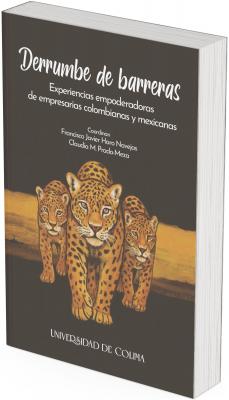
Breaking Down Barriers: Empowering Experiences by Female Colombian and Mexican Entrepreneurs
Keywords:
Economy, female empowerment, Female Colombian entrepreneurs, female Mexican Entrepreneurs, entrepreneurship, female entrepreneursSynopsis
Derrumbe de barreras. Experiencias empoderadoras de empresarias colombianas y mexicanas (Breaking Down Barriers: Empowering Experiences by Female Colombian and Mexican Entrepreneurs) is a product of original research born from the terrain and from the contact with women who carry out multiple tasks with insufficient monetary remunerations and, many times, never paid out. Moreover, in the process, they find barriers which are nearly impossible to penetrate of a legal or cultural type which are expressed within the impossibility of obtaining financial or institutional support.
The chapters, most of the times in explicit form, are propositional and a wake-up call to the difficulties that women of all ages and economic sectors face. The studies show that there are structural barriers whose destruction is necessary in order to create a new environment which may permit female entrepreneurship, for which we need the participation of the three levels of government, as well as the businesses and the banking system.
Downloads
References
Adler Lomnitz, L., y Pérez Lizaur, M. (1993). Una familia de la élite mexicana, 1820-1980: Parentesco, clase y cultura. MA Porrúa.
AEQUALES A (2023). Ranking PAR 2022, Datos de Colombia. https://aequales.com/wp-content/uploads/2023/04/Infografi%CC%81a-Colombia.pd
AEQUALES B (2023). Ranking PAR 2022, Datos de México. https://aequales.com/wp-content/uploads/2023/04/Infografi%CC%81a-Me%CC%81xico.pdf
Afful, K., y Osafo-Gyimah, K. (1976). Economic organization of the rural fishing industry: a case study of the Elmina, Bantama and Moree areas. University of Cape Coast, Centre for Development Studies.
AFP (2019). 'Se hacen ricos con nuestro trabajo': Artesanas mexicanas reclaman que marcas copien sus diseños. 2021, septiembre 21. Animalpolitico. https://www.animalpolitico.com/2019/06/artesanas-mexicanas-marcas-copian-bordados/
Ahl, H., y Marlow, S. (2012). Exploring the dynamics of gender, feminism and entrepreneurship: advancing debate to escape a dead end? Organization, 19(5), 543-562. https://doi.org/10.1177/1350508412448695
Ahmad, S., Zulkurnain N.N., y Khairushalimi F. I. (2016). Assessing the validity and reliability of a measurement model in structural equation modeling (SEM). British Journal of Mathematics & Computer Science, 15(3), 1-8. https://doi.org/10.9734/BJMCS/2016/25183
Aigneren, M. (1999). Análisis de contenido. Una introducción. La Sociología en sus escenarios, (3). Centro de estudios de opinión, Universidad de Antioquia. http://ceo.udea.edu.co
Alcaldía de Granada (2023). Información del municipio de Granada, Meta. https://granada-meta.gov.co/MiMunicipio/Paginas/Informacion-del-Municipio.aspx
Alcoff, L. (2002). Feminismo cultural vs. Post-estructuralismo: la crisis de identidad de la teoría feminista. Revista Debats, 76, 1-26.
Aldás, J., y Uriel, E. (2017). Análisis multivariante aplicado con R. Ediciones Paraninfo.
Aldrich, H. E., Brumana, M., Campopiano, G., y Minola, T. (2021). Embedded but not asleep: Entrepreneurship and family business research in the 21st century. Journal of Family Business Strategy, 12(1), https://doi.org/10.1016/j.jfbs.2020.100390
Alegre, L., Pérez Sedeño, E., y Sánchez Madrid, N. (2023). Introducción. Enciclopedia crítica del género. Una cartografía contemporánea de los principales saberes y debates de los estudios de género. Arpa.
Aljarodi, A., Rialp, A., y Urbano, D. (2021) Female entrpreneurial activity in emergeging economies: a systematic literatura review. Mujer y Economía: igualdad, oportunidades y retos, (921), 83-99. https://doi.org/10.32796/ice.2021.921.7269
Alvesson, M., y Billing, Y. (1992). Gender and Organization: Towars a Differentiated Understanding. Organization Studies, 13(1), 73-102. https://doi.org/10.1177/017084069201300107
Améstica-Rivas, L. R., King-Dominguez, A., Espinoza, C., y Daza, M. (2020). Participación de la mujer en la alta dirección de empresas chilenas y su impacto en el desempeño financiero. Revista Internacional de Investigación en Ciencias Sociales, 6(2), 248-266. https://doi.org/10.18004/riics.2020.diciembre.248
Ameyaw, A., Breckwoldt, A., Reuter, H., y Aheto, D. (2020). From fish to cash: Analyzing the role of women in fisheries in the western region of Ghana. Marine Policy, 113, 1-12. https://doi.org/10.1016/j.marpol.2019.103790
Arboleya, C. D. (2008). Mujeres Alfa... Mujeres Divinas. Congreso AMAI. Abril-junio, págs. 1-34. México, D.F.: AMAI. https://www.amai.org/old/congreso/2008/memorias/index.php
Astrachan, J. H., Binz Astrachan, C., Campopiano, G., y Baù, M. (2020). Values, spirituality and religion: Family business and the roots of sustainable ethical behavior. Journal of Business Ethics, 163, 637-645. https://doi.org/10.1007/s10551-019-04392-5
Babson College (2024). Global Entrepreneurship Monitor 2023-2024 United States Report. Babson College-Issuu. https://issuu.com/babsoncollege/docs/babson_gem_report_2024_final
Banco de Desarrollo de América Latina y el Caribe (2019). Ciudades intermedias y desarrollo en América Latina. https://www.caf.com/es/actualidad/noticias/2019/02/ciudades-intermedias-y-desarrollo-en-america-latina/
Banco Mundial (2010). Mujeres empresarias: barreras y oportunidades en el sector privado formal en América Latina y el Caribe. Banco Mundial.
Banco Mundial (2023). School enrollment, tertiary (% gross) - Mexico. <https://data.worldbank.org/indicator/SE.TER.ENRR?locations=MX&name_desc=false>.
BBVA (2024). ¿Qué es una microempresa y cuáles son sus objetivos? https://www.bbva.mx/educacion-financiera/creditos/credito-pyme-que-es-una-microempresa.html
Blazquez Graf, N. (2012). Epistemología feminista: temas centrales. Centro de Investigaciones Interdisciplinarias en Ciencias y Humanidades, UNAM.
Bolio, A. y Aparicio, R. (2023). Nivel del progreso de las empresas familiares para lograr su continuidad y armonía. IPADE Business School y BBVA.
Bradford, K., y Katikiro, R.E. (2019). Fighting the tides: A review of gender and fisheries in Tanzania. Fisheries Research, 216, 79-88. https://doi.org/10.1016/j.fishres.2019.04.003
Branch, T.A., y Kleiber, D. (2017). Should we call them fishers or fish-ermen? Fish and Fisheries, 18, 114-127. https://doi.org/10.1111/faf.12130
Bravo, N., Muñoz, C., y Vera, M. (2023). Estudiar de noche. Expectativas y desafíos de la experiencia universitaria de estudiantes que cursan un programa de pregrado vespertino. Calidad en la Educación, (58), 196-234. https://doi.org/10.31619/caledu.n58.1331
Burin, M., y Meler, I. (2010). Género y familia. Poder, amor y sexualidad en la construcción de la subjetividad. Paidos.
Bustos, C. (2009). La producción artesanal. Visión Gerencial, (1),37-52.
Byron, K., y Post, C. (2016). Women on Boards of Directors and Corporate Social Performance: A Meta-Analysis. Corporate Governance: An International Review, 24(4), 428-442. https://doi.org/10.1111/corg.12165
Byung-Chul, Han (2010). La sociedad del cansancio. Herder.
Cadoche, E., y De Montarlot, A. (2020). El síndrome de la impostora: ¿Por qué las mujeres siguen sin creer en ellas mismas? Península.
Cámara de Comercio de Villavicencio (2017). Estudio Sectorial Municipio Granada. https://s3.pagegear.co/415/71/imagenes-editor/paginas/2020/la_camara/investigaciones_economicas/inversion_neta/63.estudio_sectorial_del_municipio_de_granada_vfff.pdf
Camarena Adame, M.E., y Saavedra García, M. L. (2018). El techo de cristal en México. La ventana. Revista de estudios de género, 5 (47), 312-347. https://doi.org/10.32870/lv.v5i47.6680
Campopiano, G., De Massis, A., Rinaldi, F. R. y Sciascia, S. (2017) Women's involvement in family firms: Progress and challenges for future research. Journal of Family Business Strategy, 8(4), 200-212. https://doi.org/10.1016/j.jfbs.2017.09.001
Campopiano, G., Rinaldi, F. R., Sciascia, S., y De Massis, A. (2019). Family and non-family women on the board of directors: Effects on corporate citizenship behavior in family-controlled fashion firms. Journal of cleaner production, 214, 41-51. https://doi.org/10.1016/j.jclepro.2018.12.319
Campos Vazquez, R., Lopez-Calva, L., y Lusting, N. (2016). Declining wages for college-educated workers in Mexico. Policy Research Working Paper 7546. Word Bank Group. https://openknowledge.worldbank.org/bitstream/handle/10986/23716/Declining0wage0orts0hurt0the0most00.pdf;sequence=1 >.
Cárdenas Torrado, L., Cruz Casallas, N. E., y Álvarez Cardona, N. (2022). Revisión del marco lógico: conceptualización, metodología, variaciones y aplicabilidad en la gerencia de proyectos y programas. Inquietud Empresarial, 22(1), 117-133. https://doi.org/10.19053/01211048.13408
Carrera, M., Partida, A., Villarreal, L., y Cantú, A. (2021). Actitudes emprendedoras que inciden en el desarrollo empresarial de los estudiantes universitarios de Instituciones de Educación Superior (IES), en México. InnOvaciOnes de NegOciOs, 18(35), 83-111.
Carrillo Espadas, P.I., y Flores Galaz M. M. (2023). Mujeres científicas en Yucatán: obstáculos, retos y experiencias durante sus trayectorias educativas. RLEE Nueva Época LIII (1), 253-284. https://doi.org/10.48102/rlee.2023.53.1.532
Carr-Ruffino, N. (2001). Mujer de empresa. Prentice Hall.
Castañeda Salgado, M. P. (2019). Perspectivas metodológicas feministas para el estudio de las identidades de género. Centro de Investigaciones Interdisciplinarias en Ciencias y Humanidades, UNAM.
Castiblanco, S.E. (2013). La construcción de la categoría de emprendimiento femenino. Revista de la Facultad de Ciencias Económicas: Investigación y Reflexión, XXI(2),53-66. https://doi.org/10.18359/rfce.656
Centro de Investigación en Política Pública [IMCO]. (7 de marzo de 2023). 8M, Datos por la igualdad de género. https://imco.org.mx/8m/
Chen, M., Vanek, J., Lund, F., Heintz, J., Jhabvala, R., y Bonner, C. (2005). El progreso de las mujeres en el mundo. Mujeres, trabajo y pobreza. Fondo de Desarrollo de las Naciones Unidas para las Mujeres. chrome-extension://efaidnbmnnnibpcajpcglclefindmkaj/https://www.unwomen.org/sites/default/files/Headquarters/Media/Publications/UNIFEM/PoWW2005_spn.pdf
Chong, E.G., y Pérez, Y. (2019). Participación económica femenina y emprendimiento en el Estado de Nayarit, México. Universidad & Empresa, 21(36),36-60. https://doi.org/10.12804/revistas.urosario.edu.co/empresa/a.5988
Chuenpagdee, R. (2011). World small-scale fisheries contemporary visions. Eburon Academic Publishers.
Clance, P. R., e Imes, S. (1978). The imposter phenomenon in high achieving women: Dynamics and therapeutic intervention. Psychotherapy: Theory, Research & Practice, 15(3), 241-249. https://doi.org/10.1037/h0086006
Clance, P.R., y Imes, S. (1978). The Imposter Phenomenon in High Achieving Women: Dynamics and Therapeutic Intervention. Psychotherapy Theory, Research and Practice, 15(3), 1-8. https://doi.org/10.1037/h0086006
Collier, J.E. (2020). Applied structural equation modeling using AMOS. Basic to advanced techniques. Ed. Taylor & Francis. https://doi.org/10.4324/9781003018414
Conde Ávila, V., Cavazos Arroyo, J., Ortega Martínez, D., y Sánchez Cuevas, M. (2023). Intención Emprendedora en Estudiantes Universitarios de Ciencias Biológicas. Revista Ciencia, Tecnología y Sociedad, 3(1), 11 - 22.
Confecámaras (7 de marzo de 2023). Mujeres lideran creación de empresas en Colombia, en 2022 el 62.5% del total de empresas fueron creadas por mujeres. https://confecamaras.org.co/noticias/872-mujeres-lideran-creacion-de-empresas-en-colombia-en-2022-el-62-5-del-total-de-empresas-fueron-creadas-por-mujeres
Contreras, F., Pedraza, J., y Mejía, X. (2012). La mujer y el liderazgo empresarial. Revista Diversitas - Perspectivas en psicología, 8(1), 183-194. https://doi.org/10.15332/s1794-9998.2012.0001.12
Cruz Cardoso, J., Cardoso Jiménez, D., Garduño Espinoza, Y., y Márquez Gómez, J. (2022). Factores que influyen en estudiantes de administración para emprender en México. Revista Iberoamericana para la Investigación y el Desarrollo Educativo, 24(12), e357. https://doi.org/10.23913/ride.v12i24.1207
Cuevas de la Garza, J.F., y Ibarrola Nicolín, M. (2013). Vidas cruzadas. Los estudiantes que trabajan. Revista de la Educación Superior, I (165), 125-148.
Damián Simón, J. (2023). Factores que influyen en la intención emprendedora en los estudiantes de ciencias empresariales, cohorte 2015 - 2020. IE Revista de Investigación Educativa de la REDIECH, 14, e1827. https://doi.org/10.33010/ie_rie_rediech.v14i0.1827
Data México (2023). Municipio del estado de Colima. Data México, Gobierno de México. https://www.economia.gob.mx/datamexico/es/profile/geo/colima
De la Garza Ramos, M. I., Lorente, R., y García, E. (2006). La empresa familiar: relación de la cultura organizacional con su continuidad. CienciaUAT, 1(1), 61-66.
De la Garza Ramos, M. I., Medina Quintero, J. M., Cheín Schekaibán, N. F., Jiménez Almaguer, K. P., y Ayup González, J. (2011). Los valores familiares y la empresa familiar en el nordeste de México. Cuadernos de administración, 24(42), 315-333.
De la Garza, G.J., Morales, S.B.N., y González, C. B. A. (2013). Análisis Estadístico Multivariante. Editorial McGraw Hill.
De la Torre, R. (2006). La Ecclesia nostra: el catolicismo desde la perspectiva de los laicos: el caso de Guadalajara. Ciesas.
De la Torre, R. (2008). La Iglesia Católica en el México Contemporáneo. Resultados de una prueba de contraste entre jerarquía y creyentes. L'Ordinaire des Amériques, (210), 27-46. https://doi.org/10.4000/orda.2616
De Massis, A., y Rondi, E. (2020). COVID-19 and the future of family business research. Journal of Management Studies, 57(8), 1727-1731. https://doi.org/10.1111/joms.12632
Delorme, K., Bonomo Odizzio, A., y Volfovicz León, R. (2020). Empoderar el Emprendimiento Femenino Universitario. Journal of Technology Management & Innovation, 15(2), 71-80. https://doi.org/10.4067/S0718-27242020000200071
Destinos México (2020). Artesanías de Colima. Programa Destinos México https://programadestinosmexico.com/artesanias-de-colima/
Diario Oficial de la Federación. (2 de agosto de 2006). Ley General para la Igualdad entre Mujeres y Hombres. DOF. https://www.diputados.gob.mx/LeyesBiblio/pdf/LGIMH.pdf
Dieleman, M., y Koning, J. (2020). Articulating values through identity work: Advancing family business ethics research. Journal of Business Ethics, 163(4), 675-687.
https://doi.org/10.1007/s10551-019-04380-9
Dillanes, M.E., Espinosa, M., y Medina, C. (1998). Las mujeres y el trabajo administrativo: el perfil de una carrera ejecutiva. Gestión y Estrategia, 13, 1-21. https://doi.org/10.24275/uam/azc/dcsh/gye/1998n13/Dillanes
Discua Cruz, A. (2013). Christian family businesses: Opportunities for future research. Journal of Biblical Integration in Business,16(2), 7-28. https://doi.org/10.69492/jbib.v16i2.129
Dos Puntos (s/f). Proyecto "Moda Maya" para empoderar a las artesanas. Dos Puntos. https://dospuntosrevista.com/proyecto-moda-maya/
Duran, E., y Arias, D. (2015). Intención emprendedora en estudiantes universitarios: integración de factores cognitivos y socio-personales. Revista Colombiana de Ciencias Sociales, 2 (6), 320-340. https://doi.org/10.21501/22161201.1528
Dussán, C., y Serna, H. (2017). Planeación Estratégica para MIPYMES. Universidad Cooperativa de Colombia sede El Espinal. https://doi.org/10.16925/greylit.2085 / https://repository.ucc.edu.co/server/api/core/bitstreams/8da22c89-5881-41de-913f-288aef163b15/content
Eisenhardt, K. (1989). Building Theories from Case Study Research. The Academy of Management Review, 14(4), 532-550. https://doi.org/10.2307/258557
El Universal (4 de agosto de 2018). Artesanas recuperan la autoestima de mujeres indígenas paraguayas. El Universal. https://www.eluniversal.com.mx/cultura/artesanas-recuperan-la-autoestima-de-mujeres-indigenas-paraguayas/
El Universal (4 de diciembre de 2017). Artesanas de Yucatán buscan llegar a más mercados. El Universal. https://www.eluniversal.com.mx/estados/artesanas-de-yucatan-buscan-llegar-mas-mercados/
Erazo, M. I., Jiménez, M., y López, C. (2014). Empoderamiento y liderazgo femenino; su papel en la autogestión comunitaria en el corregimiento El Hormiguero - Valle del Cauca. Avances en Psicología Latinoamericana, 32(1), 149-157. https://doi.org/10.12804/apl32.1.2014.10
Espíritu, R., González, R., y Alcaraz, E. (2012). Desarrollo de competencias emprendedoras: Un análisis explicativo con estudiantes universitarios. Cuadernos de Estudios Empresariales, 22, 29-53. https://doi.org/10.5209/rev_CESE.2012.v22.44644
Essers, C., y Benschop, Y. (2009). Muslim businesswomen doing boundary work: The negotiation of Islam, gender and ethnicity within entrepreneurial contexts. Human relations, 62(3), 403-423. https://doi.org/10.1177/0018726708101042
Estáun, M. (2023, 19 de junio). Diccionario del Emprendedor. La jerga que usan los emprendedores. Blog IEBS. Emprendedores. Creación de empresas. https://www.iebschool.com/blog/diccionario-emprendedor-creacion-empresas/
Esteban, N. (2018) Tipos de investigación. Universidad Santo Domingo de Guzmán. https://core.ac.uk/download/pdf/250080756.pdf
Exley, C., y Kessler, J. B. (2022). The gender gap in self-promotion. The Quarterly Journal of Economics, 137(3), 1345-1381. https://doi.org/10.1093/qje/qjac003
Expansión Mujeres (15 marzo 2023). Las 100 mujeres más poderosas de los negocios en México. https://mujeres.expansion.mx/especiales/2023/03/15/100-mujeres-mas-poderosas-negocios-mexico-2023
FAO, Organización de las Naciones Unidas para la Alimentación y la Agricultura (2017). Promover la igualdad de género y el empoderamiento en las mujeres en la pesca y la acuicultura. FAO. https://www.fao.org/3/a-i6623s.pdf
Ferrusquía, M. (1 de marzo de 2022). Maka: así exalta el trabajo de artesanos y apoya el empoderamiento femenino. Forbes. https://www.forbes.com.mx/maka-asi-exalta-el-trabajo-de-artesanos-y-apoya-el-empoderamiento-femenino
Figueroa-Rodríguez, M. R, Martínez-Corona, B., y Álvarez-Gaxiola, F. (2014). Generación de poder en una organización de mujeres artesanas en Puebla, México. Ra Ximhai, 10(7),101-116. https://doi.org/10.35197/rx.10.03.e3.2014.07.mf
Fitzgerald, M. A., y Muske, G. (2016). Family businesses and community development: the role of small business owners and entrepreneurs. Community Development, 47(4), 412-430. https://doi.org/10.1080/15575330.2015.1133683
Flick, U. (2009). Designing Qualitative Research. SAGE Publications, Ltd.
Forbes México (28 de agosto de 2023). Desempleo en México se mantiene en 2.8% en el segundo trimestre. FORBES, México. https://www.forbes.com.mx/tasa-desempleo-mexico-situa-2-8-segundo-trimestre/
Fornell, C., y Larcker, D. F. (1981). Evaluating Structural Equation Models with Unobservable Variables and Measurement Error. Journal of Marketing Research, 18(1), 39-50. https://doi.org/10.1177/002224378101800104
Frangoudes, K., y Gerrard, S. (2018). (En)Gendering change in small-scale fisheries and fishing communities in a globalized world. Maritime Studies, 17, 117-124. https://doi.org/10.1007/s40152-018-0113-9
Freeman, R., y Svels, K. (2022). Women's empowerment in small-scale fisheries: The impact of Fisheries Local Action Groups. Marine Policy, 136, 1-8. https://doi.org/10.1016/j.marpol.2021.104907
Fröcklin, S., de la Torre-Castro, M., Lindström, L., Jiddawi, N.S., y Msuya, F.E. (2012). Seaweed mariculture as a development project in Zanzibar, East Africa: a price too high to pay? Aquaculture, 356-357, 30-39. https://doi.org/10.1016/j.aquaculture.2012.05.039
Garabito Hernández, Y., Calderón Campos, J.A., y Ramírez Torrez, W. E. (2021). Emprendimiento en mujeres y jóvenes. Una revisión de la literatura. Lumina, Revista Iberoamericana de Desarrollo Organizacional, 22 (2), 2-18. https://doi.org/10.30554/lumina.v22.n2.3869.2021
Garavito Hernández, Y., García Méndez, S., Ramírez Torres, W.E., y Avellaneda Rueda, C. (2023). Influencia de las características personales y factores del entorno en la intención emprendedora en estudiantes universitarios. INNOVA Research Journal, 8(1), 89-107. https://doi.org/10.33890/innova.v8.n1.2023.2201
Garcia Bezerra , T., Gomes de Macêdo Barbosa , L., Correa Vione , K., Alves Aguiar Athayde, R., y Veloso Gouveia, V. (2021). Escala Clance do Fenômeno do Impostor: adaptação brasileira. Psico-USF, 26(2), 333-343. https://doi.org/10.1590/1413-82712021260211
García, A. M., Malagón Sáenz, E., y García Mogollón, J. M. (2018). Modelos de negocios en pymes agroindustriales: desafíos en el siglo XXI. In Vestigium Ire, 11(2), 41-67. http://revistas.ustatunja.edu.co/index.php/ivestigium/article/view/1549
Gasparini, L., y Marchionni, M. (2015). La participación laboral femenina en América Latina: avances, retrocesos y desafíos. Documentos de Trabajo del CEDLAS.
Geertz, C. (1988). Works and Lives. The Anthropologist as Author. Stanford University Press.
Gehman, Joel, Vern L. Glaser, Kathleen M. Eisenhardt, Denny Gioia, Ann Langley, and Kevin G. Corley. 2017. Finding Theory-Method Fit: A Comparison of Three Qualitative Approaches to Theory Building. Journal of Management Inquiry, 27(3), 284-300. https://doi.org/10.1177/1056492617706029
Gersick, K., Davis, J., McCollon M., Lansberg, I. (1997). Empresas familiares, generación a generación. Mc Graw Gill de Managenment.
Giniger, N. (2014). Doctrina Social de la Iglesia y Responsabilidad Social Empresaria: ética y política del neoliberalismo. Sociedad y religión, 24(42), 34-66.
Glass, C., y Cook, A. (2018). Do women leaders promote positive change? Analyzing the effect of gender on business practices and diversity initiatives. Human Resource Management, 57(4), 823-837. https://doi.org/10.1002/hrm.21838
Gómez-Mejia, L., Basco, R., Gonzalez, A. C., y Muller, C. G. (2020). Family business and local development in Iberoamerica. Cross Cultural & Strategic Management, 27(2), 121-136. https://doi.org/10.1108/CCSM-02-2020-223
González, R. (2015). Promoción de emprendimientos sociales y productivos a través de la actividad de vinculación de la Universidad de Colima. En Polanco y Torres (coords.), Estrategia industrial en la era del conocimiento. Universidad de Colima.
González, R. (2017). Determinantes de la empleabilidad y nivel de ingresos de los egresados de licenciatura de la Universidad de Colima, uso de modelos de regresión no lineales. En Carbajal S. Y. y de Jesús A. L. (Coords.), Dinámica del empleo y la producción manufacturera en México (pp.147-170). UAEM, México.
González, R., Tinoco, M., y Romero, S. (2021). El ambiente de negocios y la innovación empresarial en el desempeño de las mipymes en el municipio de Colima, Colima, México. En Burgueño y Torres (coord.), El comportamiento de la micro, pequeña y mediana empresa en las regiones de México ante los desafíos globales. Universidad de Colima, Universidad de Autónoma de Baja California.
González, R., Torres, V., y Tinoco, M. (2017). Análisis empírico de los determinantes del emprendimiento en estudiantes universitarios. El caso de la Universidad de Colima en México. Economía y Sociedad 36.
Grant, A.M., y Shandell, M. S. (2022). Social motivation at work: the organizational psychology of effort for, against, and with others. Annual Review of Psychology, 73(1) 01-326. https://doi.org/10.1146/annurev-psych-060321-033406
Guamán Gómez, V. J., Erraéz Alvarado, J. L., y Alejandro Contento, K. J. (2019). Inclusión social en las instituciones educativas ecuatorianas. Revista Metropolitana de Ciencias Aplicadas, 2(2), 84-91. https://doi.org/10.62452/as7c7g41
Güemez Ricalde, F. J., y Fernández Castillo, A. d. (2011). Perfil de la mujer alfa en la frontera México-Belice. Multiciencias, 11(2), 166 - 176).
Gustavsson, M., Frangoudes, K., Lindström, L., Álvarez Burgos, M.C., y de la Torre-Castro, M. (2021). Gender and Blue Justice in small-scale fisheries governance. Marine Policy, 133, 1-8. https://doi.org/10.1016/j.marpol.2021.104743
Hair, J.F., Ronald, L.T., Anderson, R.E., y Black, W. (1999). Análisis multivariante (5ª ed.). Prentice Hall Iberia.
Harding, S. (1998). Can men be subjects of feminist thought? En T. Digby (Ed.), Men doing feminism (pp. 171-196). Routledge. https://books.google.com.mx/books?hl=en&lr=&id=vc_WAQAAQBAJ
Harper, S., Adshade, M., Lam, V.W.Y., Pauly, D., y Sumaila U.R. (2020). Valuing invisible catches: estimating the global contribution by women to small-scale marine capture fisheries production. PLoS ONE, 15(3), 1-16. https://doi.org/10.1371/journal.pone.0228912
Harper, S., Grubb, C., Stiles, M., y Sumaila, U.R. (2017). Contributions by women to fisheries economies: insights from five maritime countries. Coastal Management, 45(2), 91-106. https://doi.org/10.1080/08920753.2017.1278143
Harper, S., Zeller, D., Hauzer, M., Pauly, D., y Rashid, U. (2013). Women and fisheries: Contribution to food security and local economies. Marine Policy, 39, 56-63. https://doi.org/10.1016/j.marpol.2012.10.018
Heller, L. (1997). Por qué llegan las que llegan. Feminaria Editora.
Herrera, C. D. (2018). Investigación cualitativa y análisis de contenido temático. Orientación intelectual de revista Universum. Revista general de información y documentación, 28(1), 119. https://doi.org/10.5209/RGID.60813
Hollander, B. S., y Bukowitz, W. R. (1990). Women, family culture, and family business. Family Business Review, 3(2), 139-151. https://doi.org/10.1111/j.1741-6248.1990.00139.x
Hooper, D., Coughlan, J., y Mullen, M. (2008). Structural Equation Modelling: Guidelines for Determining Model Fit. Electronic Journal of Business Research Methods, 6(1), 53-60. https://doi.org/10.21427/D7CF7R
Ibarra-Morales, L.E., Campechano-Escalona, E.J., Díaz de Campechano, I.C., y Paredes-Zempual, D. (2023). Habilidades directivas como factor determinante en la competitividad de empresas mexicanas. Revista Venezolana de Gerencia, 28 (No. Especial 9), 360-376. https://doi.org/10.52080/rvgluz.28.e9.23
Iberdrola (2024). La marca personal en las redes sociales, una combinación ganadora. https://www.iberdrola.com/talento/marca-personal-redes-sociales
INEGI (2020). Censo de Población y Vivienda 2020. México en cifras. https://www.inegi.org.mx/app/areasgeograficas/?ag=203240025#collapse-Resumen
INEGI (2020). Demografía y Sociedad. Religión. Instituto Nacional de Estadística y Geografía. https://www.inegi.org.mx/temas/religion/
INEGI (2022). Encuesta Nacional de Inclusión Financiera. https://www.inegi.org.mx/contenidos/saladeprensa/boletines/2022/enif/ENIF21.pdf
INEGI (2023). Comunicado de prensa Núm. 279/23. Encuesta Nacional de Ocupación y Empleo 2023. inegi.org.mx
INEGI (2023). Indicadores de ocupación y empleo. https://www.inegi.org.mx/contenidos/saladeprensa/boletines/2023/enoen/enoen2023_ 07.pdf
INEGI (2024). México en cifras. https://www.inegi.org.mx/app/areasgeograficas/
INEGI. (2019). Encuesta Nacional de Productividad y Competitividad de la Pyme 2018. INEGI.
Instituto Nacional de Estadística y Geografía [INEGI] (2022). Encuesta Nacional de Ocupación y Empleo. Población de 15 años y más. https://www.inegi.org.mx/programas/enoe/15ymas/
Iyiola, O., y Azuh, D. E. (2014). Women entrepreneurs as small-medium enterprise (SME) operators and their roles in socio-economic development in Ota, Nigeria. http://www.ijebf.com/IJEBF_Vol.%202,%20No.%201,%20January%202014/WOMEN%20ENTREPRENEURS.pdf
Jiménez García, N. (2021). Mujeres del manglar. Transgresión de los espacios masculinos y lucha por la visibilidad y aceptación de mujeres pescadoras en Oaxaca, México. Tekoporá. Revista Latinoamericana De Humanidades Ambientales y Estudios Territoriales, 3(2), 24-48. https://doi.org/10.36225/tekopora.v3i2.135
Karimi, S., Biemas, H.J. A., Lans, T., Chizari, M., Mulder, M., y Mandei, K. N. (2013). Understanding role models and gender influences on entrepreneurial intentions among college students. Procedia - Social and Behavioral Sciences, 93, 204 - 214. https://doi.org/10.1016/j.sbspro.2013.09.179
Kavas, M., Jarzabowski, P., y Nigam, A. (2020). Islamic family businesses: The constitutive role of religion in business. Journal of Business Ethics, 163 (4), 689-700.
https://doi.org/10.1007/s10551-019-04384-5
Kemp, S. (13 febrero 2023). Digital 2023: México. Data Reportal. https://datareportal.com/reports/digital-2023-mexico
Koljatic, M. (2002). Líderes hombres y mujeres: Diferencias y semejanzas. Escuela de Administración de la Pontificia Universidad Católica de Chile.
Kuratko, D.F., Hornsby, J.S., y Goldsby, M.G. (2007). The Relationship of stakeholder salience, organizational posture, and entrepreneurial intensity to corporate entrepreneurship. Journal of Leadership and Organizational Studies, 13, 56-72. https://doi.org/10.1177/10717919070130040801
Kushardanto, H., Jakub, R., Suherfian, W., Subarno, T., Ansyori, A., Sara L., Alimina, N., Fajriah, Kardini, L., de la Rosa, E., Yuliani, A., Medianti, E., Pradana, I., Setiawan, H., Muhammad, Y., Djafar, L., Box S., Cox, C., y Campbell, S. (2022). Household finances and trust are key determinants of benefits from small-scale fisheries co-management. Marine Policy, 145, 1-10. https://doi.org/10.1016/j.marpol.2022.105284
La red Binacional de mujeres Niu Matat Napawika (s/f). La producción artesanal y las mujeres. https://laredniumatat.org/
Lagarde, M. (1990). Identidad femenina. Secretaría Nacional de Equidad y Género, 25, 32.
Lair, D. J., Sullivan, K., y Cheney, G. (2005). Marketization and the Recasting of the Professional Self: The Rhetoric and Ethics of Personal Branding. Management Communication Quarterly, 18(3), 307-343. https://doi.org/10.1177/0893318904270744
Lee, S., Kang, M.J., y Kim, B.-K. (2022). Factors Influencing Entrepreneurial Intention: Focusing on Individuals' Knowledge Exploration and Exploitation Activities. Journal of Open Innovation: Technology, Market and Complexity, 8, 165. https://doi.org/10.3390/joitmc8030165
Lemus Barahona, L. (2023). El género hace al trabajo: aportes de la economía feminista a la sociología de las relaciones laborales. Ciencia Política, 18(35), 147-164.
https://doi.org/10.15446/cp.v18n35.105136
Lesmes, L. (9 de junio de 2023). Colombia está entre los países con más empresas de mujeres. El Tiempo. https://www.eltiempo.com/tecnosfera/novedades-tecnologia/asi-le-va-al-emprendimiento-femenino-en-colombia-776469
Levy, M.J.P., y Varela, M. J. (2008). Análisis multivariante para las ciencias sociales. Pearson educación.
Ley Federal del Trabajo [LFT]. (2024). Última reforma publicada el 24-12-2024. Diario Oficial de la Federación el 1º de abril de 1970. (México). https://www.diputados.gob.mx/LeyesBiblio/pdf/LFT.pdf
Leyte-Morales, G. (2023, noviembre). Blanqueamiento de los arrecifes de coral en Huatulco. IV Foro de Pesca Responsable en Huatulco, Santa Cruz, Oaxaca.
Leyva, J. (10 de febrero de 2022). Empresas familiares representan el 90% de las unidades de negocio de México. El Financiero. https://www.elfinanciero.com.mx/economia/2022/02/10/empresas-familiares-representan-el-90-de-las-unidades-de-negocio-de-mexico/
Liñán, F., y Rodríguez, J.C. (2015). Assessing the stability of graduates' entrepreneurial intention and exploring its predictive capacity, Academia Revista Latinoamericana de Administración, 28(1), 77-98. https://doi.org/10.1108/ARLA-06-2013-0071
Lodico, M., Spaulding, D., y Voegtle, K. (2010). Methods in Educational Research: From Theory to Practice. John Wiley & Sons - Jossey-Bass.
Macías G., G. G. (2021). Desentramando lo alteño y lo chapeteado. Redes transgeneracionales y de negocios de las mujeres en las empresas familiares avícolas. En Bayardo, L y Macías, G. G. (Coord.) Redes femeninas en la historia y en la actualidad (281-320). El Colegio de Jalisco.
Macías G., G. G. (2023a). Women in Mexican Family Businesses of the textile sector, Regional Legacy and Community Well-being. Ifera 2023 Annual Conference "Back to the Core". International Family Enterprise Research Academy (IFERA), 5-8 de julio de 2023.
Macías G., G. G. (2023b). Capítulo V. Miradas intergeneracionales. Itinerarios de mujeres integrantes de una empresa familiar. En Castañeda, L. y Araújo, E. (Coord.), Tiempo y Sociedad. Reflexiones y temas Emergentes (107-128). Universidad de Guadalajara y Universidad do Miho
Maldonado, G., Santos, L.E., Espino, P.G., y Moreno, E. (2023). Divergencia en la aplicación de habilidades directivas por género y su impacto en el desempeño de las Mipymes del Altiplano Hidalguense. Revista RELAYN- Micro y Pequeña Empresa en Latinoamérica, 7(2), s/p.
https://doi.org/10.46990/relayn.2023.7.2.976
Mardisentosa, B., Khusaini, y Asmoro, G, W. (2020). Personality, Gender, Culture, and Entrepreneurial Intentions of Undergraduate Student: Binary Logistic Regression. Jurnal Pendidikan Ekonomi & Bisnis, 8 (2), 127-142. https://doi.org/10.21009/JPEB.008.2.5
Martínez Cisneros, A. (2022). Un análisis del impacto académico sobre los jóvenes que estudian y trabajan en la Facultad de Contaduría Pública y Administración. Revista Inferencia Empresarial, 3(5), 17-24.
Marulanda, F., Montoya, I., y Velez, J. (2014). Aportes teóricos y empíricos al estudio del emprendedor. Cuadernos de Administración, 30(51), 89-99. https://doi.org/10.25100/cdea.v30i51.46
Maseda, A., Iturralde, T., Cooper, S., y Aparicio, G. (2022). Mapping women's involvement in family firms: A review based on bibliographic coupling analysis. International Journal of Management Reviews, 24(2), 279-305. https://doi.org/10.1111/ijmr.12278
Maxwell, J. (2019) Diseño de investigación cualitativa. Un enfoque interactivo. Gedisa Editorial.
McDonald, M. L., y Westphal, J. D. (2013). Access denied: Low mentoring of women and minority first-time directors and its negative effects on appointments to additional boards. Academy of Management Journal, 56(4), 1169-1198. https://doi.org/10.5465/amj.2011.0230
Miles y Huberman, (1994). Data management and analysis methods. In N. K. Denzin & Y. S. Lincoln (Eds.), Handbook of qualitative research. (428-444). Sage Publications, Inc.
Miranda, J., Sandoval, M., y Berttolini, D. G. (2023). Competencias emprendedoras de la mujer en el contexto mexicano. Telos: Revista de Estudios Interdisciplinarios en Ciencias Sociales, 25(1), 52-70. https://doi.org/10.36390/telos251.05
Mitzberg, H. (2009). Manging. Norma.
Monge, R., y Rodríguez, J. (2014). El impacto de los servicios financieros y de capacitación en las MIPYMES de Costa Rica. Tec Empresarial, 8(1), 19-32. https://doi.org/10.18845/te.v8i1.1722
Monteith, W., y Camfield, L. (2019) Business as Family, Family as Business: Female Entrepreneurship in Kampala, Uganda. Geoforum, 101, 111-121. https://doi.org/10.1016/j.geoforum.2019.03.003
Montesinos López, O.A., Luna Espinoza, I., Hernández Suárez, C.M., y Tinoco Zermeño, M. A. (2019). Muestreo estadístico. Tamaño de muestra y estimación de parámetros. Universidad de Colima.
Mora Guerrero, G., Meli Fernández, D., y Astete Ramos, P. (2018). Empoderamiento y demanda de autogestión. Estudio comparativo de emprendimientos de mujeres indígenas. SOPHIA AUSTRAL, 21, 43-59. https://doi.org/10.4067/S0719-56052018000100043
Morgan, K. (2022, 6 de agosto). Qué son las "habilidades blandas" y por qué cada vez más compañías se fijan en ellas al contratar. BBC News Mundo. https://www.bbc.com/mundo/vert-cap-62340757
Moya-Díaz, E., y Hernández-Aracena, J. (2014). El rol de los colegios de élite en la reproducción intergeneracional de la elite chilena. Revista Austral de Ciencias Sociales, (26), 59-82. https://doi.org/10.4206/rev.austral.cienc.soc.2014.n26-04
Müggenburg, M. C., y Pérez, I. (2007). Tipos de estudio en el enfoque de investigación cuantitativa. Enfermería Universitaria, 4(1),35-38.
Mujer Ejecutiva. (2023). 29% de las empresas familiares en México son dirigidas por mujeres. https://mundoejecutivo.com.mx/mujer-ejecutiva/29-de-las-empresas-familiares-en-mexico-son-dirigidas-por-mujeres/
Muñoz Durán, M. (2023). ¿Auto-explotación? Mujeres con dos o más empleos. Sin publicar. https://doi.org/10.55555/IS.29.613
Muñoz, C.D. (s/f). Diagnóstico cualitativo sobre las necesidades de empresarias indígenas y rurales. Instituto Nacional de las Mujeres. http://cedoc.inmujeres.gob.mx/documentos_download/101247.pdf
Mutis, A.P., y Horbath, J.E (2019). Elementos de discriminación estructural y brechas de desigualdad laboral hacia los pueblos indígenas mexicanos. Editorial CONAPRED.
Muzari, T., Nevers Shava, G., y Shonhiwa, S. (2022). Qualitative Research Paradigm, a Key Research Design for Educational Researchers, Processes and Procedures: A Theoretical Overview. Indiana Journal of Humanities and Social Sciences, 3(1), 14-20.
Nanda, R., y Sorensen, J. (2009). Workplace Peers and Entrepreneurship. Harvard Business School Entrepreneurial Management, Working Paper No. 08-051. https://doi.org/10.2139/ssrn.1084874
Nessier, A.F., Pagura M.F., Pacífico, A.M., y Zandomeni, N. (2018). Estudiantes universitarios que trabajan: Desafíos de la simultaneidad. Escritos Contables y de Administración, 8(2), 57-78. https://doi.org/10.52292/j.eca.2017.600
OCDE (2013). La igualdad de género en la práctica empresarial. En Cerrando brechas de género: es hora de actuar (373- 434). CIEDES. Parte IV. OCDE. https://read.oecd-ilibrary.org/social-issues-migration-health/cerrando-las-brechas-de-genero_9789264208582-es#page372
Ogar Idiku, F., Effiong Ntu, O., Aje Iyamah, D., y Okaja Ochang, D. (2022). Analysis of Gender Participation in Fish Production Value Chain in Akpabuyo, Cross River State Nigeria. World Journal of Advanced Research and Reviews, 13(02), 131-135. https://doi.org/10.30574/wjarr.2022.13.2.0113
OIT (2018). El trabajo de cuidados y los trabajadores del cuidado para un futuro con trabajo decente. Resumen ejecutivo. https://www.ilo.org/es/publications/el-trabajo-de-cuidados-y-los-trabajadores-del-cuidado-para-un-futuro-con
Olson, P. D., Zuiker, V. S., Danes, S. M., Stafford, K., Heck, R. K., y Duncan, K. A. (2003). The impact of the family and the business on family business sustainability. Journal of business venturing, 18(5), 639-666. https://doi.org/10.1016/S0883-9026(03)00014-4
ONU Mujeres. (2017). Transversalización de género en los objetivos de desarrollo sostenible - Agenda 2030. https://lac.unwomen.org/sites/default/files/Field%20Office%20Americas/Documentos/Publicaciones/2018/1/50969%20%20UN%20WOMEN%20Gender%20perspective%20on%20SDG%20Item%202webcompressed.pdf
Oppenheimer, A. (2018). Sálvese quien pueda: el futuro del trabajo en la era de la automatización. Edición digital. Editorial Debate.
Ordoñez Chichizola, M., y Solari Castro, A. (2022). Hábitos alimentarios, estrés académico y estrés laboral en jóvenes que estudian y trabajan. Facultad de Ciencia de los Alimentos Nutrición y Técnicas Alimentarias, Universidad le Cordon Bleu.
Organización Internacional del Trabajo (14 de 12 de 2015). Las mujeres en las juntas directivas. Servicio de Género, Igualdad y Diversidad (GED) - Departamento de Condiciones de trabajo e igualdad. https://www.ilo.org/es/resource/brief/las-mujeres-en-las-juntas-directivas-construir-la-reserva-de-talento
Organización Internacional del Trabajo (2015). La mujer en la gestión empresarial: cobrando impulso. Organización Internacional del Trabajo.
Organización Internacional del Trabajo (OIT) (2019). Guía para establecer una ordenación del tiempo equilibrada. Servicio de Producción, Impresión y Distribución de Documentos y Publicaciones (PRODOC) de la OIT.
Organización Internacional del Trabajo (OIT), y Gallup. (2017). Hacia un futuro mejor para las mujeres en el trabajo: la opinión de las mujeres y de los hombres. Organización Internacional del Trabajo.
Organización Internacional del Trabajo [OIT] (2020). Realidades de las mujeres indígenas: Una mirada desde el Navegador Indígena. https://www.ilo.org/global/topics/indigenous-tribal/WCMS_760040/lang--es/index.htm
Ortiz, C., Duque, Y.V., y Camargo, D. (2008). Una revisión a la investigación en emprendimiento femenino. Revista de la Facultad de Ciencias Económicas: Investigación y Reflexión, XVI(1),85-104.
Osterwalder, A., y Pigneur, Y. (2011). Generación de modelos de negocio. Un manual para visionarios, revolucionarios y retadores. Planeta libros.
Otero Ortega, A., y Llop Torne, J.M. (2020). La ciudad intermedia: crecimiento y dinámicas de desarrollo. Territorios, 43, ESP.: 1-8. Universidad del Rosario. https://www.redalyc.org/articulo.oa?id=35765008001
Ovalles Toledo, L., Moreno, Z., Olivares, M., y Silva, H. (2018). Habilidades y capacidades del emprendimiento: un estudio bibliométrico. Revista Venezolana de Gerencia, 81(23), 217-234. https://www.redalyc.org/articulo.oa?id=29055767013
Pacheco, J. F., y Archila, S. (2020). Guía para construir teorías del cambio en programas y proyectos sociales. Parque Científico de Innovación Social. https://isfcolombia. uniandes. edu. co/images/2020-intersemestral/18_de_junio/PCIS_Gua_para_elaborar_una_teora_del_cambio. pdf.
Pallares, M. (22 de octubre de 2013). México es el quinto país con más empresas familiares a nivel mundial. El Financiero. https://www.elfinanciero.com.mx/archivo/mexico-es-el-quinto-pais-con-mas-empresas-familiares-a-nivel-mundial/
Pallarès-Blanch, M, Vera, A., y Tulla, A. (2018). Emprendimiento e innovación de las mujeres. Cuadernos Geográficos, 57(3), 36-57. https://doi.org/10.30827/cuadgeo.v57i3.5770
Parada, E., Leyva, L., Parada, E., Ochoa, J., Verdugo, M., De la Garza, M., Medina, J., Cheín, N., Macías, G., Acevedo, E., Garmendia, E., y Díaz, A. (2013). La mujer empresaria en México. Pearson Educación, México. ISBN: 978-607-32-2075-0 https://www.academia.edu/26965378/Estudio_de_la_mujer_empresaria_mexicana_El_caso_de_las_empresarias_jaliscienses
Paredes, S.P., Castillo, M., y Saavedra, M. L. (2019). Factores que influyen en el emprendimiento femenino en México. Suma de Negocios, 10(23),158-167. https://doi.org/10.14349/sumneg/2019.V10.N23.A8
Parque Científico de Innovación Social Minuto de Dios (2020). Ruta de la innovación social. Parque Científico de Innovación Social - PCIS. http://www.uniminuto.edu/web/pcis/pci
Paz Calderón, Y. (2023). Una aproximación al tema de emprendimiento de mujeres jóvenes en México. Espiga, 22(45), 78-95. https://doi.org/10.22458/re.v22i45.4645
Peña, D. (2002). Análisis de datos multivariantes. Mc Graw Hill.
Pérez, P. F., y Lluch, A. (Eds.). (2015). Familias empresarias y grandes empresas familiares en América Latina y España: una visión de largo plazo. Fundacion BBVA.
Pineda, R. S. (2002). La mujer indígena: ante la pobreza. Convergencia. Revista de Ciencias Sociales, 9(28),0.
Ponce Romero, G. (2022). Competencias emprendedoras y su relación con los modelos de negocio innovadores en el distrito de Huancayo 2020. [Tesis doctoral]. Universidad Nacional del Centro del Perú. Unidad de Posgrado de la Facultad de Ciencias de la Administración.
Ponce-Romero, G. (2022). Competencias emprendedoras y su relación con los modelos de negocio innovadores en el distrito de Huancayo 2020 [Tesis doctoral]. Universidad Nacional del Centro del Perú. Unidad de Posgrado de la Facultad de Ciencias de la Administración.
Portafolio (29 de diciembre de 2023). Desempleo en Colombia bajó al 9% en noviembre, la cifra más baja de 2023. https://www.portafolio.co/economia/empleo/desempleo-en-colombia-noviembre-de-2023-595096
Preciado, C.L. (2023). Análisis de las habilidades directivas de las mujeres tonaltecas dueñas de microempresas. Revista RELAYN. Micro y Pequeña empresa en Latinoamérica, 7(4), 22-35. https://doi.org/10.46990/relayn.2023.7.4.1137
Puga, Y. G. (2023). El lienzo de modelo de negocios o modelo canvas: herramienta para emprendedores. Revista FAECO sapiens, 6(1), 347-363.
Ramírez, L. (1998). Conclusiones. La invención del tiempo: la identidad femenina entre el trabajo y la casa. En Gail Mummert y Luis Alfonso Ramírez Carrillo (Eds.), Rehaciendo las diferencias: identidades de género en Michoacán y Yucatán (293-319). El Colegio de Michoacán y Universidad Autónoma de Yucatán.
Ramírez, M. A., Navarro, I., y Godínez, P. (2022). Apuntes teóricos para estudiar a las derechas mexicanas en el siglo XXI. En Ackerman, J., Ramírez, Miguel Ángel, Escamilla, A. y Jurado, I. (Coord.), Las derechas en México (55-82). Debates analíticos y estudios de caso.
Rentería, M., Velásquez, A. G., y Reátegui, L. (2020). Educados en el privilegio: trayectorias educativas y reproducción social de las élites en Perú. RES. Revista Española de Sociología, 29(3), 561-578. https://doi.org/10.22325/fes/res.2020.35
Revenga, A., y Sudhir, S. (2012). Potenciar a la mujer es un enfoque económico inteligente. Finanzas & Desarrollo, 49(1), 40-43. https://www.imf.org/external/pubs/ft/fandd/spa/2012/03/pdf/revenga.pdf
Rodiles-Hernández, S., Cerdenares-Ladrón de Guevara, G., Ramos Carrillo, S., Méndez-Maldonado, L., y Quiroz-Uría, M. (2024). La participación de la mujer en la red de producción y el valor agregado resultado de las actividades pesqueras. Un estudio de caso en Puerto Ángel. Ciencia Pesquera, 32(núm. esp.), 33-43. https://doi.org/10.64106/cienciapesquera.v32iEspecial.7
Romero Silva, S.G. (2018). Propuesta de fortalecimiento de la política pública de fomento comercial para el municipio de Colima para el periodo 2018-2021. [Tesis para obtener el grado de Maestra en Gestión del Desarrollo]. Facultad de Economía, Universidad de Colima.
Saavedra García, M.L. (2023). El empoderamiento femenino a través del emprendimiento en la era digital. Multidisciplinary Business Review, 16 (2), 37-51. https://doi.org/10.35692/07183992.16.2.4
Sallah, C. A., y Caesar, L. D. (2022). Performance of Ghanaian women businesses community: the moderating role of social competence. Journal of Enterprising Communities: People and Places in the Global Economy, 16(3), 450-471. https://doi.org/10.1108/JEC-12-2020-0209
Sánchez, C. P., Uriguen Aguirre, P., y Vega Jaramillo, F. (2021). Discriminación y desigualdad salarial. Exploración de brechas por género en Ecuador. https://repositorio.upse.edu.ec/handle/46000/7656
Sánchez, M., y Villarroel, R. (2018). Significados que las mujeres construyen sobre el trabajo, el poder y el liderazgo, desde sus experiencias de trabajo extradoméstico. Revista Temas Sociológicos (22), 119 - 149. https://doi.org/10.29344/07196458.22.1680
Scheidt, S., Gelhard, C., y Henseler, J. (2020). Old practice, but young research field: A systematic bibliographic review of personal branding. Frontiers in psychology, 11, 1-18. https://doi.org/10.3389/fpsyg.2020.01809
Schreiber J.B., Stage, F.K., King, J., Nora A., y Barlow E. A. (2006). Reporting Structural Equation Modeling and Confirmatory Factor Analysis Results: A Review. The Journal of Educational Research, 99 (6), 323 - 337. https://doi.org/10.3200/JOER.99.6.323-338
Schumacker, R.E., y Lomax, R.G. (2004) A beginner's guide to structural equation modeling. Psychology Press. Taylor & Francis Group. Second Edition. https://doi.org/10.4324/9781410610904
Scott, J.W. (1996). El género: una categoría útil para el análisis histórico. En: Martha Lamas (Comp.), El género: la construcción cultural de la diferencia sexual, pp. 265-602. Miguel Ángel Porrúa.
Shalli, M.S. (2017). The role of local taboos in the management of marine fisheries resources in Tanzania. Marine Policy, 85, 71-78. https://doi.org/10.1016/j.marpol.2017.08.017
Sharma, C. (2003). The Impact of Fisheries Development and Globalization Processes on Women of Fishing Communities in the Asian Region. Asia-Pacific Resource Network Journal, 8, 1-12.
Siason, I.M., Tech, E., Matics, K.I., Choo, P., Shariff, M., Heruwati, E.S., y Sunderarajan, M. (2010). Women in fisheries in Asia. Global Symposium on Women in Fisheries: Sixth Asian Fisheries Forum, pp. 21-48.
Simeonova, B., y Hughes, M. (2022, November 25). How three women upheld family values and thrived despite adversity. FamilyBusiness.org. https://doi.org/10.32617/810-6380d043a9311
Singh, V., Kumra, S., y Vinnicombe, S. (2002). Gender and impression management: Playing the promotion game. Journal of business ethics, 37, 77-89. https://doi.org/10.1023/A:1014782118902
Smith, R. (2014). Assessing the contribution of the 'theory of matriarchy'to the entrepreneurship and family business literatures. International journal of gender and entrepreneurship, 6(3), 255-275. https://doi.org/10.1108/IJGE-06-2011-0061
Soriano Chavero, M. (2023). Ser padre y estudiante universitario en México: la oportunidad de ser un mejor hombre. Emerging Trends in Education, 5(10), 13-24. https://doi.org/10.19136/etie.a5n10.5327
Strauss, A., y Corbin, J. (2016). Bases de la investigación cualitativa. Técnicas y procedimientos para desarrollar la teoría fundamentada. Metodología. SAGE-Editorial Universidad de Antioquía.
Sumra, M. K. (2019). Masculinity, femininity, and leadership: Taking a closer look at the alpha female. PLOS ONE, 14(4), 1-32. https://doi.org/10.1371/journal.pone.0215181
Tabasco.gob (2023, marzo). Comparten artesanas tabasqueñas su pasión, éxito y retos de noble éxito. Tabasco.gob.mx https://tabasco.gob.mx/noticias/comparten-artesanas-tabasquenas-su-pasion-exito-y-retos-de-noble-oficio
Tabor, W., Madison, K., Marler, L. E., y Kellermanns, F. W. (2020). The effects of spiritual leadership in family firms: A conservation of resources perspective. Journal of Business Ethics, 163(4), 729-743. https://doi.org/10.1007/s10551-019-04379-2
Thiessen, V., Davis, A., y Jentoft, S. (1992). The veiled crew: an exploratory study of wives' reported and desired contributions to coastal fisheries enterprises in Northern Norway and Nova Scotia. Human Organization, 51(4), 342-352. https://doi.org/10.17730/humo.51.4.50317x7522h1wm61
Tocando puertas con Clau y Paco (2020, abril). Barro bruñido de Comala [video]. https://www.youtube.com/watch?v=RR17yBExojM&t=86s
Tocando puertas con Clau y Paco (2020, febrero). Artesanías de Suchitlán, parte 1 [video]. https://www.youtube.com/watch?v=P2VEDiWEbb0&t=12s
Tocando puertas con Clau y Paco (2020, febrero). Artesanías de Suchitlán, parte 2 [video]. https://www.youtube.com/watch?v=9u3sqhU2WXs
Toniut, H. R. (2020). El uso del modelo de negocio para la innovación empresarial: aportes de los principales autores. Palermo Business Review, (22), 139-156. https://www.palermo.edu/negocios/cbrs/pdf/pbr22/PBR_22_08.pdf
Torre, J., Hernandez-Velasco, A., Fernandez Rivera-Melo, F., Lopez J., y Espinosa-Romero, M.J. (2019). Women's empowerment, collective actions, and sustainable fisheries: lessons from Mexico. Maritime Studies, 18, 373-384. https://doi.org/10.1007/s40152-019-00153-2
Treviño, L. K., Weaver, G. R., y Reynolds, S. J. (2006). Behavioral ethics in organizations: A review. Journal of Management,32(6), 951-990. https://doi.org/10.1177/0149206306294258
Turker, D., y Selcuk, S.S. (2009). Which factors affect entrepreneurial intention of university students? Journal of European Industrial Training, 33(2),142 - 159. https://doi.org/10.1108/03090590910939049
UNESCO (2023, diciembre). México celebra 20 años del instrumento que moviliza al mundo por el patrimonio vivo y sus comunidades. https://www.unesco.org/es/articles/mexico-celebra-20-anos-del-instrumento-que-moviliza-al-mundo-por-el-patrimonio-vivo-y-sus
Urbano, C.J., Paz, Y., Espinosa, M.T., y Maceda, A. (2018). Impulso a emprendimientos productivos de mujeres rurales. NOVUM, Revista de Ciencias Sociales Aplicadas, I(8), 164-190.
Valladolid, M. (2023, agosto) Las artesanías, un mercado millonario en el que casi no ganan las mujeres que crean las piezas. Forbes https://www.forbes.com.mx/las-artesanias-un-mercado-millonario-en-el-que-casi-no-ganan-las-mujeres-que-crean-las-piezas/
Ventana (29 de mayo de 2023). La importancia del emprendimiento en la economía. https://www.ebc.mx/ventana/importancia-del-emprendimiento-en-la-economia/
Ward, R. M., Popson, H. C., y DiPaolo, D. G. (2010). Defining the Alpha Female: A Female Leadership Measure. Journal of Leadership and Organizational Studies, 17(3), 309-320. https://doi.org/10.1177/1548051810368681
Wicks, A. (2014). Stakeholder theory and spirituality. Journal of Management, Spirituality & Religion,11(4), 294-306. https://doi.org/10.1080/14766086.2014.917984
Williams, M.J. (2008) Why Look at Fisheries through a Gender Lens? Development, 51, 180-185. https://doi.org/10.1057/dev.2008.2
World Bank (2024). Reports, Key Findings-Women, Business and the Law-World Bank Group. World Bank. https://wbl.worldbank.org/en/reports
Worldfish Center (2010). Gender and fisheries: do women support, complement or subsidize men's small-scale fishing activities? Issues Brief, 8, 1-8.
Xu, B., y Ma, L. (2022). Religious values motivating CSR: An empirical study from corporate leaders' perspective. Journal of Business Ethics, 176(3), 487-505. https://doi.org/10.1007/s10551-020-04688-x
Zabludovsy, G. (2020). Mujeres y empresas. Tendencias estadísticas y debates conceptuales. Revista Mexicana de Ciencias Políticas y Sociales, Universidad Nacional Autónoma de México. Nueva Época, Año lxv, núm. 240, septiembre-diciembre de 2020, pp. 431-459. ISSN-2448-492X. https://doi.org/10.22201/fcpys.2448492xe.2020.240
Zhao, M., Tyzack, M., Anderson, R., y Onoakpovike, R. (2013). Women as visible and invisible workers in fisheries: A case study of Northern England. Marine Policy, 37, 69-76. https://doi.org/10.1016/j.marpol.2012.04.013
Downloads
Published
Series
Categories
License

This work is licensed under a Creative Commons Attribution-NonCommercial-ShareAlike 4.0 International License.