
Capítulo 5. Desacoplamiento entre actividades productivas y emisiones contaminantes al aire en México, 2003-2022

Authors

Rafael Ortiz Pech
Universidad Autónoma de Yucatán
https://orcid.org/0000-0002-9221-6989
Lilian Albornoz Mendoza
Universidad Autónoma de Yucatán
https://orcid.org/0000-0002-6888-1073
Javier Becerril García
Universidad Autónoma de Yucatán
https://orcid.org/0000-0003-3785-1469

Synopsis

This chapter estimates and interprets a decoupling index to assess whether Mexico’s productive activity has become less emissions-intensive over 2003–2022. Using INEGI’s economic–ecological accounts and the national greenhouse-gas inventory, it builds time series for GDP, air-emission indicators, and environmental depletion and degradation costs (CTADA), then applies the Tapio elasticity approach to classify annual decoupling regimes. The evidence indicates predominant weak positive decoupling—emissions grow, but more slowly than GDP—with occasional strong positive decoupling and an anomalous recessionary decoupling in 2020 linked to COVID-19 restrictions. The chapter concludes that environmental pressures have moderated but require reinforced, sector-targeted policies.
Author Biographies

Rafael Ortiz Pech, Universidad Autónoma de Yucatán

ORCID: https://orcid.org/0000-0002-9221-6989

Rafael Ortiz Pech has a PhD in Economic Sciences from Universidad Autónoma de Baja California. He teaches courses regarding Economic Growth, Economic Development, Systems of Geographic and Economic Information of the aforementioned institution; he is the editor of the Notebook of Economy and International Commerce of the UADY. His lines of research are: Rural Economy, Community Nutrition, The Environment, and Sustainable Development in Small Communities. 

Lilian Albornoz Mendoza, Universidad Autónoma de Yucatán

ORCID: https://orcid.org/0000-0002-6888-1073

Lilian Albornoz Mendoza has a PhD in Regional Economy from the University of Seville, in Spain and is a professor at the Faculty of Economy of Universidad Autónoma de Yucatán, México. She belongs to the National System of Researchers (level I) and is the Coordinator of Ecos Yucatan Network of Energy and The Environment of Secretaría de Ciencia, Humanidades, Tecnología e Innovación (2025-2028); Vice-President of Asociación Mexicana de la Matriz Insumo-Producto and a member of the Editorial Committee of the Problemas del Desarrollo del Instituto de Investigaciones Económicas de la UNAM Journal and of the Aportes Nueva Época Journal of the Faculty of Economy of the BUAP and is the Director of the Economy Jouranal of Faculty of Economy of the UADY. Her lines of research are: Sustainable Development (Water, Energy, Agri-food System) and Multisectorial models.

Javier Becerril García, Universidad Autónoma de Yucatán

ORCID: https://orcid.org/0000-0003-3785-1469

Javier Becerril García has a PhD in Agricultural Economics from the University of Kiel, Germany and is a research professor at the Faculty of Economy of the Autonomous University of Yucatan (UADY). He is also a member of the National System of Researchers (level II) and participates in the forming of human resources of postgraduate level and in Academic Management, as a member of the academic committees of the PhD in Social Sciences and of the master’s degree in Public Policies of UADY. His academic work is characterized by an interdisciplinary focus and by the link among research, teaching, and social relevance. His lines of research are: Agricultural Economics; Biocultural Heritage and the Agrodiversity with emphasis on the traditional productive systems of the cornfield and Traditional Mayan Solar, Sustainable Rural Development and the relation between  Economy, Territory, and Philosophical Mayan Thinking.

Downloads

Published

February 18, 2026

How to Cite

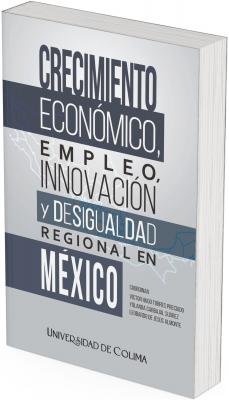
Ortiz Pech, R., Albornoz Mendoza, L., & Becerril García, J. (2026). Capítulo 5. Desacoplamiento entre actividades productivas y emisiones contaminantes al aire en México, 2003-2022. In V. H. Torres Preciado, Y. Carbajal Suárez, & L. de J. Almonte, Economic Growth, Labor, Innovation, and Regional Inequality in Mexico (pp. 134-169). University of Colima. https://www.libros.ucol.mx/index.php/dgp/catalog/book/233/chapter/261