
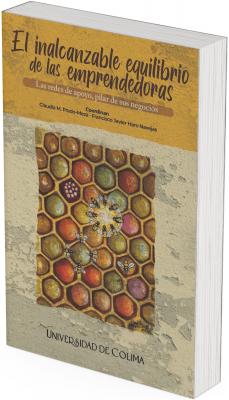
The Unreachable Balance of Entrepreneurial Women: Support Networks: Pillar of Their Businesses
Keywords:
Female entrepreneurship, female Mexican entrepreneurs, support networks, gender gap, violet economy, Initiatives of women’s self-employmentSynopsis
In a world where women’s entrepreneurship stands like a pilar for social and economic development, The Unreachable Balance of Entrepreneurial Women offers a deep view into the challenges and opportunities that women face in their efforts to reach economic autonomy. This book explores how support networks become a vital resource between their work and family resources, since female entrepreneurs sail in an environment dominated by men.
The research in this book show women’s constant work and effort to make their contributions visible in a system that minimizes their labor. From the creation of businesses in emerging sectors, to overcoming gender stereotypes, in each of the chapters, the resilience and creativity of the entrepreneurs who defy the established norms and redefine their meaning in a contemporary context stand out. It is essential reading for those who seek to understand the dynamics of women’s entrepreneurship and the transformative impact they may have on our societies and it is also an invitation to design public policies that may encourage entrepreneurship, promote gender equality, and recognize care work
Downloads
References
Acosta, R. (2000). Dirección, gestión y administración de las organizaciones deportivas. Paidotribo.
Acosta, R. y Carpenter, J. (2014). Woman in intercollegiate sport: A longitudinal, national study. Thirty-Seven Year Update, 1977-2014. ERIC. https://eric.ed.gov/?id=ED570882
Agenjo-Calderón, A., & Gálvez-Muñoz, L. (2019). Feminist economics: Theoretical and political dimensions. American Journal of Economics and Sociology, 78(1), 137-166. https://doi.org/10.1111/ajes.12264
Aguiar, W. M. J. y Ozella, S. (2006). Núcleos de significação como instrumento para a apreensão da constituição dos sentidos. Psicologia: Ciência e Profissão, 26(2), 222-245. https://doi.org/10.1590/S1414-98932006000200006
Ahl, H. (2002). The Making of the Female Entrepreneur. A Discourse Analysis of Research Texts on Women's Entrepreneurship. Jönköping University.
Ahl, H. (2006). Why Research on Women Entrepreneurs Needs New Directions. ET & P, 30(5), 595-622. https://doi.org/10.1111/j.1540-6520.2006.00138.x
Ahl, H. (2006). Why Research on Women Entrepreneurs Needs New Direccions. Entrepreneurship, Theory and Practice, 30(5), 594-621. https://doi.org/10.1111/j.1540-6520.2006.00138.x
Ahl, H. y Marlow, S. (2012). Exploring the dynamics of gender, feminism, and entrepreneurship: advancing debate to escape a dead end? Organization, 19(5), 543-562. https://doi.org/10.1177/1350508412448695
Albarrán, I. (7 de abril de 2023). El papel de las mujeres en el liderazgo empresarial. MitSloan Management Review. https://mitsloanreview.mx/colaborador/el-papel-de-las-mujeres-en-el-liderazgo-empresarial/
Aldrich, H. y Waldinger, R. (1990). Ethnicity and entrepreneurship. Annual Review of Sociology, 16, 111-135. https://doi.org/10.1146/annurev.so.16.080190.000551
Alfaro Gandarillas, É. (2012). El liderazgo de las mujeres en la dirección y gestión del deporte. https://ruc.udc.es/dspace/bitstream/handle/2183/9077/ActasGEXAFD4.pdf
Alfaro, É.; Vázquez, B.; Gallardo-Pérez, J. y Ferro, S. (2012). La participación de las mujeres dentro de la Dirección General de Deportes de la Comunidad de Madrid y las federaciones deportivas madrileñas. Ciencias Sociales y Humanas, XI(II), 7-16. https://doi.org/10.64197/Kronos.11.01-02.688
Alkhaled, S. (2021). Women's entrepreneurship in Saudi Arabia: Feminist solidarity and political activism in disguise? Gender, Work and Organization, 28(3), 950-972. https://doi.org/10.1111/gwao.12626
Altan-olcay, Ö. (2014). Entrepreneurial Subjectivities and Gendered Complexities: Neoliberal Citizenship in Turkey. Feminist Economics, (October), 37-41. https://doi.org/10.1080/13545701.2014.950978
Álvarez, M. J.; Rebollo, M. A. y Rodríguez, M. R. (2013). Factores facilitadores y bloqueadores del emprendimiento femenino: orientar para el emprendimiento desde una perspectiva de género. XVI Congreso Nacional y II Internacional de Modelos de Investigación Educativa (pp. 427-425). Universidad de Alicante. https://core.ac.uk/download/pdf/157763941.pdf
Anderson, S. (2010). Liderazgo directivo: claves para una mejor escuela. Psicoperspectivas, 9(2), 34-52. https://doi.org/10.5027/psicoperspectivas-Vol9-Issue2-fulltext-127
Arias, P. (2001). Mujeres en los negocios y mujeres de negocios. En D. Barrera Bassols (Comp.), Empresarias y ejecutivas con poder (pp. 139-178). Colmex. https://doi.org/10.2307/j.ctvhn0d3f.6
Arocas, R. L. (2006). Gestión deportiva, investigación actual. Promolibro.
Ávila, J. (3 de agosto de 2022). Mujeres en la industria del deporte mexicano. Life and Style. https://lifeandstyle.expansion.mx/entretenimiento/2022/03/08/mujeres-en-la-industria-del-deporte-mexicano
Ayatakshi-Endow, S. y Steele, J. (2021). Striving for balance: women entrepreneurs in Brazil, their multiple gendered roles and covid-19. International Journal of Gender and Entrepreneurship, 13(2), 121-141. https://doi.org/10.1108/IJGE-09-2020-0142
Bahn, K., Cohen, J., & van der Meulen Rodgers, Y. (2020). A feminist perspective on COVID-19 and the value of care work globally. Gender, Work & Organization, 27(5), 695-699. https://doi.org/10.1111/gwao.12459
Bamber, M.; Allen-Collinson, J. N. y McCormack, J. (2017). Occupational limbo, transitional liminality and permanent liminality: New conceptual distinctions. Human Relations, 70(12), 1514-1537. https://doi.org/10.1177/0018726717706535
Banco Interamericano de Reconstrucción y Fomento /Banco Mundial (BIRF/BM). (2010). Mujeres empresarias: barreras y oportunidades en el sector privado formal en América Latina. BID/BM.
Bardach, E. (2005). Practical guide for policy analysis: The eightfold path to more effective problem solving. Washington: Congressional Quarterly Inc.
Bargawi, H., Cozzi, G., & Himmelweit, S. (Eds.). (2016). Economics and austerity in Europe: Gendered impacts and sustainable alternatives. Routledge. https://doi.org/10.4324/9781315627762
Barrachina, M. M.; García, M. C. y Calderón, C. (2021). Análisis temporal (periodo 2001-2015) de los factores que identifican el emprendimiento femenino en España por oportunidad y necesidad. Investigación Operacional, 42(3), 309-314. https://rev-inv-ope.pantheonsorbonne.fr/sites/default/files/inline-files/42321-01.pdf
Barrera Bassols, D. (2001), Empresarias y ejecutivas con poder. El Colegio de México.
Basco, A. I.; Verna, Á. B.; Silva, A. M.; Barafani, M.; Torres, N. S. A. y Cruz, S. O. (2021). Una olimpíada desigual: la equidad de género en las empresas latinoamericanas y del Caribe. Benitez, A. V. y Merino, M. F. (Eds.). https://doi.org/10.18235/0003427
Bastian, B. L., Metcalfe, B. D., & Zali, M. R. (2019). Gender inequality: Entrepreneurship development in the MENA region. Sustainability, 11(22), 6472. https://doi.org/10.3390/su11226472
Beauchamp, T. L. y Childress, J. F. (2001). Principles of biomedical ethics. Oxford University Press.
Belvedresi, R. E. (2018). Historia de las mujeres y agencia femenina: algunas consideraciones epistemológicas. Epistemología e Historia de la Ciencia, 3(1), 5-17.
Bengtsson, M. (2016). How to plan and perform a qualitative study using content analysis. NursingPlusOpen, 2, 8-14. https://doi.org/10.1016/j.npls.2016.01.001
Bergeron, S. (2016). Formal, informal, and care economies. Oxford University Press. https://doi.org/10.1093/oxfordhb/9780199328581.013.10
Bergmann, B. R. (2005). The economic emergence of women. Palgrave Macmillan. https://doi.org/10.1057/9781403982582
Blalock, E. C., Fan, Y., & Lyu, X. (2023). A systematic literature review of Chinese entrepreneurship: utilizing feminist theory with implications for public policy. Entrepreneurship & Regional Development, 35(5-6), 482-510. https://doi.org/10.1080/08985626.2023.2184873
Blanco, L. J. (2019). Liderazgo en los equipos deportivos: Qué pueden aprender los directivos de empresas de los grandes deportistas. Economía y Desarrollo, 162(2). http://scielo.sld.cu/scielo.php?script=sci_arttext&pid=S0252-85842019000200009
Blanco, M. (2012). Autoetnografía: una forma narrativa de generación de conocimientos. Andamios, 9(19), 49-74. https://doi.org/10.29092/uacm.v9i19.390
Blau, F. & Kahn, L. (2020). The gender pay gap: Have women gone as far as they can? In Inequality in the United States (pp. 345-362). Routledge. https://doi.org/10.4324/9781003071709-31
Bowen, P. W.; Rose, R. y Pilkington, A. (2017). Mixed methods-theory and practice. Sequential, explanatory approach. International Journal of Quantitative and Qualitative Research Methods, 5(2), 10. http://www.eajournals.org/journals/international-journal-of-quantitative-and-qualitative-research-methods-ijqqrm/vol-5-issue-2-may-2017/mixed-methods-theory-practice-sequential-explanatory-approach/
Braun, V. y Clarke, V. (2006). Utilizando el análisis temático en psicología. Investigación cualitativa en psicología, 3(22), 77-101
Brown, C. A. (1975). Patriarchal capitalism and the female-headed family. Social Scientist, 4 (4/5), pp. 28-39. https://doi.org/10.2307/3516119
Bruni, A.; Gehrardi, S. y Poggio, B. (2004). Doing Gender, Doing Entrepreneurship: An Ethnographic Account of Intertwined Practices. Gender, Work and Organization, 11 (4), 406-429. https://doi.org/10.1111/j.1468-0432.2004.00240.x
Brush, C. G. (1992). Research on women business owners: Past trends, a new perspective, and future directions. Entrepreneurship Theory and Practice, 16(4), 5-30. https://doi.org/10.1177/104225879201600401
Calás, M. B.; Smircich, L. y Bourne, K. A. (2009). Extending the Boundaries: Reframing "Entrepreneurship as Social Change" through Feminist Perspectives. The Academy of Management Review, 34(3), 552-569. https://doi.org/10.5465/amr.2009.40633597
Cámara de Diputados del Honorable Congreso de la Unión. (2020). Dictámenes de discusión. Gaceta Parlamentaria. http://gaceta.diputados.gob.mx/PDF/64/2020/nov/20201118-V.pdf
Cámara de Diputados del Honorable Congreso de la Unión. (2022). Ley Federal del Trabajo. https://docs.mexico.justia.com/federales/ley-federal-del-trabajo.pdf
Cámara de Diputados del Honorable Congreso de la Unión. (2023). Ley de Asistencia Social. https://www.diputados.gob.mx/LeyesBiblio/pdf/LASoc.pdf
Cámara de Diputados del Honorable Congreso de la Unión. (2024). Constitución Política de los Estados Unidos Mexicanos. https://www.diputados.gob.mx/LeyesBiblio/pdf/CPEUM.pdf
Camarena, M. E. y Hernández, L. H. (2018). El emprendimiento como factor de empoderamiento femenino. Emprendedores al servicio de la pequeña y mediana empresa, (171), 24-26. http://emprendedores.unam.mx/articulo.php?id_articulo=54
Canales, R. A., Román, Y. G. y Ovando, W. (2017). Emprendimiento de la población joven en México. Una perspectiva. Entreciencias: diálogos en la sociedad del conocimiento, 5(12), 1-23. https://doi.org/10.21933/J.EDSC.2017.12.211
Cantú, M.; Bobek, V.; Hazbo, S. y Maček, A. (2018). Cultural foundations of female entrepreneurship in Mexico: Challenges and opportunities. Naše Gospodarstvo/Our Economy, 64(1), 28-40. https://doi.org/10.2478/ngoe-2018-0004
Carrillo, N. (2017). Género y poder: ¿por qué no hay mujeres directivas? Sitio Web de la Universitat Oberta de Catalunya. en: https://www.uoc.edu/portal/es/news/actualitat/2017/033-genero-poder.html
Castañeda, M. P. (2012). Etnografía feminista. Centro de Investigaciones Interdisciplinarias en Ciencias y Humanidades, UNAM. https://ru.ceiich.unam.mx/bitstream/123456789/3161/1/Investigacion_Feminista_Cap10_Etnografia_feminista.pdf
Castiblanco, S. E. (2013). La construcción de la categoría de emprendimiento femenino. Revista Facultad de Ciencias Económicas: Investigación y Reflexión, 21(2), 53-66. https://doi.org/10.18359/rfce.656
Castles, S. y Miller, M. J. (2009). The age of migration. Palgrave Macmillan.
Castro, M. A. A. B.; García, M. L. S. y Adame, M. E. C. (2015). Hacia una comprensión de los conceptos de emprendedores y empresarios. Suma de Negocios, 6(13), 98-107. https://doi.org/10.1016/j.sumneg.2015.08.009
Cayupare Piaroa, B. J. (2023). migración bajo una perspectiva de género: Un análisis acerca de la operación acogida en el estado de Roraima (Trabalho de Conclusão de Curso Bacharel em Relações Internacionais). Universidade Federal da Integração Latino-Americana, Foz do Iguaçu. http://dspace.unila.edu.br/123456789/7644
CEEY. (2022). Sistema Nacional de Cuidados: Una vía para la igualdad de oportunidades y la movilidad social. Nota de política pública CEEY, 1, Centro de Estudios "Espinosa Yglesias". https://ceey.org.mx/wp-content/uploads/2022/03/Sistema-Nacional-de-Cuidados.pdf
Centro de Investigación y Docencia Económicas (CIDE). (2017). Diagnóstico sobre el problema público en materia de cuidados en México. https://aga.funcionpublica.gob.mx/aga/Home/Documento?doc=A2%20Diag%C3%B3stico%20cuidados%20M%C3%A9xico%20CIDE.pdf
Chaves Groh, M. J. (2020). Incertidumbre ante los nuevos escenarios migratorios. Transformaciones recientes en la migración en tránsito en Costa Rica. Si Somos Americanos, 20(1), 33-54. https://doi.org/10.4067/S0719-09482020000100033
Chiavenato, I. (1999). Administración de Recursos Humanos (5.ª ed.). McGraw-Hill. https://frrq.cvg.utn.edu.ar/pluginfile.php/15522/mod_resource/content/0/Chiavenato%20Idalverto.%20Administraci%C3%B3n%20de%20Recursos%20Humanos.pdf
Chirinos, M. (2020). Las mujeres emprendedoras son clave para la economía mundial. Subgerente de Responsabilidad Social en el BCP. La Cámara. La revista digital de la CCI. https://lacamara.pe/maria-alejandra-chirinos-las-mujeres-emprendedoras-son-clave-para-la-economia-mundial/
Chung, E. A.; Draudt, D. y Tian, Y. (2023). The developmental migration state. Journal of Ethnic and Migration Studies. [Advance online publication] 50(3) 637-656. https://doi.org/10.1080/1369183X.2023.2269781
Colmenares E., A. M. y Piñero M., M. L. (2008). La investigación acción. Una herramienta metodológica heurística para la comprensión y transformación de realidades y prácticas socio-educativas. Laurus, 14(27), 96-114.
CONADE-SINADE. (2023). La participación de las mujeres en el Sistema Nacional del Deporte. Archivo de la Subdirección de Cultura Física.
Consejo Nacional de Evaluación de la Política de Desarrollo Social (Coneval). (2022). Fichas de monitoreo y evaluación 2021-2022. México. https://www.coneval.org.mx/InformesPublicaciones/Paginas/Mosaicos/Fichas_Monitoreo_Evaluacion_2021-2022.aspx
Conti, E. y Cassel, S. H. (2020). Liminality in nature-based tourism experiences as mediated through social media. Tourism Geographies, 22(2), 413-432. https://doi.org/10.1080/14616688.2019.1648544
Contreras, F. D. (2021). La concepción del emprendimiento: Una aproximación desde la posibilidad real de CS Peirce. Panorama Económico, 29(1), 48-72. https://doi.org/10.32997/pe-2021-3643
Contreras, F.; Pedraza, J. E. y Mejía, X. (2012). La mujer y el liderazgo empresarial. Diversitas, 8(1), 131-142. https://doi.org/10.15332/s1794-9998.2012.0001.12
Corbin, C.; Pangrazi, R. y Franks, B. (2000). Definitions: health, fitness, and physical activity. https://eric.ed.gov/?id=ED470696
Covarrubias, I. (2003). Emprendedores y empresarios: un enfoque institucional. Revista Contribuciones a la Economía (En línea). https://eumed.net/ce/icm-emp.htm
Cramer, L.; Carvalho; M., Silvia, Á. L. y De Brito, M. J. (2012). Representações Femininas Da Ação Empreendedora: Uma Análise Da Trajetória Das Mulheres No Mundo Dos Negócios. Revista de Empreendedorismo e Gestão de Pequenas Empresas, 1(1), 53-71. https://doi.org/10.14211/regepe.v1i1.14
Crenshaw, K. (1994). Mapping the margins: Intersectionality, identity politics, and violence against women of color. In M. A. Fineman y R. Mykitiuk, (Eds.), The public nature of private violence (pp. 93-118). Routledge.
Creswell, J. W. (2009). Research Design: Qualitative, Quantitative, and Mixed Methods Approaches. SAGE.
Cummings, T. G. y Worley, C. G. (2009). Organization development & change (9th ed.). Thomson South-Western.
Dassonneville, R., & McAllister, I. (2018). Gender, political knowledge, and descriptive representation: The impact of long-term socialization. American Journal of Political Science, 62(2), 249-265. https://doi.org/10.1111/ajps.12353
De Bruin, A.; Brush, C. y Welter, F. (2007). Advancing a Framework for Coherent Research on Women's Entrepreneurship. Entrepreneurship Theory & Practice, 31 (3), 323-339. https://doi.org/10.1111/j.1540-6520.2007.00176.x
De Oliveira, M.; Valle, A. L. y Reyes, K. P. L. (2021). Refugio y remesas: Un análisis basado en el perfil socioeconómico de refugiados en Brasil. Subsidios para el desarrollo de políticas. Migración y Desarrollo, 19(36), 115-142. https://doi.org/10.35533/myd.1936.mo
Denda, E. M.; Paolini, N. A. y Tirachini, B. (2016). Tres mujeres en la administración: Lillian Moller Gilbreth, Mary Parker Follett y Joan Woodward. Ciencias Administrativas, (7), 57-65.
Díaz-Carrión, I. A. (2018). Tourism entrepreneurship and gender in the global south: The mexican experience. En Stroma Cole (Ed), Gender Equality and Tourism: Beyond Empowerment. (pp. 108-117). CABI. https://doi.org/10.1079/9781786394422.0108
Díaz-Carrión, I. A., Kido Cruz, M., Teresa y Ceyca Lugo, A. (2022). Determinantes socioeconómicos del empoderamiento de emprendedoras en Tijuana, México. Región y Sociedad, 34(abril), e1522. https://doi.org/10.22198/rys2022/34/1522
Díaz-Carrión, I. A.; Vizcaino-Suárez, P. y Gaggiotti, H. (2020). Change within the change: pregnancy, liminality and adventure tourism in Mexico. Tourism Geographies, 22(2), 370-391.https://doi.org/10.1080/14616688.2020.1713876
Diez, R. (2016). La historia del fitness. R10 Entrenamiento Natural. https://www.entrenamientonatural.com/la-historia-del-fitness/
DIF Tepatitlán. (s.f). Página de inicio [Facebook]. https://www.facebook.com/DIFTepatitlan/?locale=es_LA
Doshi, V. (2022). Experiencing liminality: At the crossroads of neoliberal and gendered experiences. Gender, Work & Organization, 29(4), 1132-1148. https://doi.org/10.1111/gwao.12810
Durán, R. y López, R. (2018). Liderazgo deportivo de la mujer. Una visión crítica. Revista Actividad Física y Ciencias, 10(3), 23-40. https://revistas.upel.edu.ve/index.php/actividadfisicayciencias/article/view/1300/1216
Eisler, R. (2013). Building a Caring Economy and Society. Beyond Capitalism, Socialism, and Other Old Isms, 2(6).
Ekinsmyth, C. (2011). Challenging the Boundaries of Entrepreneurship: The Spatialities and Practices of UK «mumpreneurs». Geoforum, 42 (1), 104-114. https://doi.org/10.1016/j.geoforum.2010.10.005
Ekoja, G., Agbaeze, E., Namah, E., & Ajoku, O. (2020). Female entrepreneurship and socioeconomic development: From the Social Feminist Theory (SFT) Versus Theory of Need of Achievement (TNA) of entrepreneurial personality trait and intention perspective. International Journal of Management, 11(9), 1276-1306.
Escapa, R. y Martínez, L. (2009). Estrategias de liderazgo para mujeres directivas. Instituto de la Mujer. https://es.scribd.com/document/779010720/Estrategias-de-liderazgo-para-mujeres-directivas-Rosa-Escapa-Garracho-n-Luz-Marti-nez-Ten
Escuela de Organización Industrial. (2024). The Break. https://www.eoi.es/es/the-break
Estudio para realizar una propuesta de política pública de cuidados en México. (2017). Comisionado por Conapred al CIDE. https://aga.funcionpublica.gob.mx/aga/Home/Documento?doc=2.1%20RENAC.pdf
Evetts, J. (2000). Analysing Career Change in Women's Careers: Culture, Structure and Action Dimensions. Gender Work and Organization, 7(1), 57-67. https://doi.org/10.1111/1468-0432.00093
Exley, C. L., & Kessler, J. B. (2022). The gender gap in self-promotion. The Quarterly Journal of Economics, 137(3), 1345-1381. https://doi.org/10.1093/qje/qjac003
Federici, S. (2010). Calibán y la bruja. Mujeres, cuerpo y acumulación originaria. Traficantes de sueños.
Federici, S. (2013). Revolución en punto cero. Trabajo doméstico, reproducción y luchas feministas. Traficantes de sueños.
Fernández, M. y Martínez, L. (2010). Participación de las mujeres en las empresas turísticas privadas y comunitarias de Bahías de Huatulco, México ¿Hacia un cambio en el rol de género? Cuadernos de Turismo, 26, 159-151. http://revistas.um.es/turismo/article/viewFile/116311/110071
Fernández-Aldecua, M. J.; García-de-Fuentes, A. y Jouault, S. (2022). Gobernanza, redes y liderazgo en una cooperativa ecoturística maya de Yucatán, México. Cooperativismo & Desarrollo, 30(123), 1-31. https://doi.org/10.16925/2382-4220.2022.02.02
Ferraz, A.; Piau, W. G.; Pessoa, U. y Fontes, C. M. (2014). Empreendedorismo feminino como sujeito de pesquisa. Revista Brasileira de Gestao de Negocios, 16(51), 319-342. https://doi.org/10.7819/rbgn.v16i51.1508
Figueroa-Domecq, C., Jong de, A. y Williams, A. M. (2020). Gender, tourism & entrepreneurship: A critical review. Annals of Tourism Research, 84, e102980. https://doi.org/10.1016/j.annals.2020.102980
Finke, J.; Osorio-Tinoco, F. y Laverde, F. P. (2021). Empoderamiento femenino, emprendimiento y pobreza. El caso colombiano. Cuadernos de Administración, 34, 1-18. https://doi.org/10.11144/Javeriana.cao34.efepcc
Flores, Z. (2020). Mujer y deporte en México. Hacia una igualdad sustancial. Retos. Nuevas tendencias en Educación Física, Deporte y Recreación (37), 1. https://recyt.fecyt.es/index.php/retos/article/view/71684/45234
Folbre, N. (2009). Varieties of patriarchal capitalism. Social Politics, 16(2), 204-209. https://doi.org/10.1093/sp/jxp011
Folkman, J. y Zenger, J. (2019). Research: Women Score Higher Than Men in Most Leadership Skills. Harvard Business Review. https://hbr. org/2019/06/research-women-score-higher-than-men-in-most-leadership-skills.
Foppiano-Vilo, G.; Matus-Castillo, C. y Cornejo-Améstica, M. (2022). Barreras, facilitadores y estrategias que influyen en la participación femenina en juntas directivas de federaciones deportivas chilenas. Retos. Nuevas Tendencias en Educación Física, Deporte y Recreación, (44), 34-44. https://doi.org/10.47197/retos.v44i0.90136
Fraser, N. (2007). Feminist politics in the age of recognition: A two-dimensional approach to gender justice. Studies in Social Justice, 1(1), 23-35. https://doi.org/10.26522/ssj.v1i1.979
Freitez, A. (2023). ¿Avanza la integración socioeconómica de los migrantes venezolanos? Revista Temas de Coyuntura, (86), 55-87. https://revistasenlinea.saber.ucab.edu.ve/index.php/temasdecoyuntura/article/view/6126
Fretes, P. E. (2020). Estilos de liderazgo directivo en educación superior. Ciencia Latina. Revista Multidisciplinar, 4(2), 594-612. https://doi.org/10.37811/cl_rcm.v4i2.101
Galindo, M. A., & Ribeiro, D. (Eds.). (2011). Women's entrepreneurship and economics: New perspectives, practices, and policies. (Vol. 1000). Springer Science & Business Media.
Gamba, S. (2008) ¿Qué es la perspectiva de género y los estudios de género? Mujeres en Red. El periódico feminista. http://www.mujeresenred.net/spip.php?article1395.
Gandini, L.; Prieto, V. y Lozano-Ascencio, F. (2020). Nuevas movilidades en América Latina: la migración venezolana en contextos de crisis y las respuestas en la región. Cuadernos Geográficos, 59(3), 103-121. https://doi.org/10.30827/cuadgeo.v59i3.9294
García Vicente, A. I. (2021). Liderazgo en femenino. Trabajo de Fin de Grado, Universidad de Las Palmas de Gran Canaria. https://accedacris.ulpgc.es/bitstream/10553/109854/1/TFG%20Ana%20Isabel%20Garcia%20Vicente.pdf
García, D. (2006). Implantación de la modalidad emprendedora en México. Trayectorias, 8(20-21), 139-151.
Garcia, J.; Álvarez, P. y Reyna, R. (2007). Características del emprendedor de éxito en la creación PYMES españolas. Estudios de Economia Aplicada, 25(3), 3. http://www.redalyc.org/articulo.oa?id=30113818017%0AEstudios
García-Lorenzo, L., Sell-Trujillo, L. y Donnelly, P. (2020). Entrepreneuring after 50: the liminal identity transitions of older emergent entrepreneurs. Entrepreneurship & Regional Development, 32(9-10), 922-942. https://doi.org/10.1080/08985626.2020.1849408
Garmann, C. y Meier, B. (2015). "It's capitalism on coke!": From temporary to permanent liminality in organization studies. Culture and Organization, 21(4), 321-337. https://doi.org/10.1080/14759551.2014.901326
Gioia, D. (2021). A systematic methodology for doing qualitative research. The Journal of Applied Behavioral Science, 57(1), 20-29. https://doi.org/10.1177/0021886320982715
Gissi Barbieri, N.; Alvis, S. P. y Flórez de Andrade, A. (2022). Odisea en un mar de tierra: migraciones venezolanas en Brasil, Uruguay y Paraguay. Revista CIDOB d'Afers Internacionals, 130, 193-219. https://doi.org/10.24241/rcai.2022.130.1.193
Global Entrepreneurship Monitor (GEM) (2022). Mexico Reports. https://www.gemconsortium.org/economy-profiles/mexico-2
Global Entrepreneurship Monitor (GEM) (2023). Global Entrepreneurship Monitor 2022/23 Women's Entrepreneurship Report. https://www.gemconsortium.org/reports/womens-entrepreneurship
Gobierno de Guerrero. (septiembre de 2022). Guerrero.gob.mx. https://www.guerrero.gob.mx/wp-content/uploads/2022/09/CONVOCATORIA-APOYO-MUJERES-VULNERABLES-Sam.pdf
Gobierno de Jalisco. (s.f.). Jalisco, Gobierno del Estado. https://info.jalisco.gob.mx/gobierno/programas/10406
Gobierno de México. (2020). Programa Nacional para la Igualdad entre Mujeres y Hombres 2020-2024. http://cedoc.inmujeres.gob.mx/documentos_download/Proigualdad%202020-2024%20Web.pdf
Gobierno de México. (2023). Ley General para la Igualdad entre Mujeres y Hombres. Instituto Nacional de las Mujeres. https://www.diputados.gob.mx/LeyesBiblio/pdf/LGIMH.pdf
Gobierno de México. (s.f.). Becas "Benito Juárez". https://becasbenitojuarezmx.com/opciones-de-apoyos-economicos-para-mujeres-en-la-cdmx/
Gobierno de Sonora. (5 de mayo de 2023). Gobierno de Sonora. https://www.sonora.gob.mx/gobierno/acciones/dependencias/inicia-gobierno-de-sonora-registro-para-proyectos-productivos-mujer-emprende-y-yo-puedo
Gobierno de Tabasco. (14 de noviembre de 2023). Tabasco.gob.mx. https://tabasco.gob.mx/noticias/lanzan-en-tabasco-programa-mujeres-fuerza-del-sureste
Gobierno del Estado de Jalisco. (s.f.). Bécate. https://info.jalisco.gob.mx/gobierno/programas-apoyo/modalidad/22544
Gobierno del Estado de Jalisco. (s.f.). Empresarias de alto impacto. https://misprogramas.jalisco.gob.mx/programas/panel/programa/761
Gobierno del Estado de Jalisco. (s.f.). Madres solteras. https://info.jalisco.gob.mx/tipos-de-usuario/madres-solteras?page=3
Godínez, C. J. y Cisneros, F. J. (2020). El liderazgo femenino y su gestión en las organizaciones deportivas del municipio de Colima. [Tesis de licenciatura inédita]. Universidad de Colima.
González Rey, F. L. (2007). Investigación cualitativa y subjetividad. Los procesos de construcción de la información. McGrawHill.
González, C. H. y Gálvez, É. J. (2008). Modelo de emprendimiento en Red-MER. Aplicación de las teorías del emprendimiento a las redes empresariales. Academia. Revista latinoamericana de administración, (40), 13-31. https://www.redalyc.org/pdf/716/71612100003.pdf
Graneheim, U. H.; Lindgren, B.-M. y Lundman, B. (2017). Methodological challenges in qualitative content analysis: A discussion paper. Nurse Education Today, 56, 29-34. https://doi.org/10.1016/j.nedt.2017.06.002
Granovetter, M. (1973). The strength of weak ties. American Journal of Sociology, 78(6), 1360-1380. https://doi.org/10.1086/225469
Gutek, B. A. (2001). Women and paid work. Psychology of Women Quarterly, 25(4), 379-393. https://doi.org/10.1111/1471-6402.00036
Gutiérrez, M.; Such, M. J. y Gabaldón, P. (2020). La mujer emprendedora en el turismo rural: peculiaridades del caso costarricense a través de la revisión bibliográfica. Cuadernos de Turismo, 46, 185-214. https://doi.org/10.6018/turismo.451691
Guzmán C., J. y Rodríguez Gutiérrez, M. J. (2008). Comportamiento de las mujeres empresarias: una visión global. Revista de Economía Mundial, 18, 381- 392.
Guzman, J., & Kacperczyk, A. O. (2019). Gender gap in entrepreneurship. Research Policy, 48(7), 1666-1680. https://doi.org/10.1016/j.respol.2019.03.012
Haraway, D. (1988). Situated Knowledges: The Science Question in Feminism and the Privilege of Partial Perspective. Feminist Studies, 14(3), 575-599. https://doi.org/10.2307/3178066
Henry, C.; Foss, L. y Ahl, H. (2015). Gender and entrepreneurship research: A review of methodological approaches. International Small Business Journal, (9037), 1-45. https://doi.org/10.1177/0266242614549779
Hermes, M. (2020). Migración venezolana en Brasil: reflexiones a la luz de las regulaciones del Mercosur y la nueva Ley de Inmigración. Latin American Law Review, 1(5), 159-179. https://doi.org/10.29263/lar05.2020.08
Hernández, R.; Bello, E.; Montoya, G. y Estrada, E. (2005). Social adaptation ecotourism in the Lacandon forest. Annals of Tourism Research, 32(3), 610-627. https://doi.org/10.1016/j.annals.2004.08.005
Himmelweit, S. (2017). Changing norms of social reproduction in an age of austerity. Ochanomizu University, Departmental Bulletin Paper, 151, 01-02.
Holmgren, C.; From, J.; Olofsson, A.; Karlsson, H.; Snyder, K. y Sundtron, U. (2005). Entrepreneurship education: Salvation or damnation? Journal of Entrepreneurship Education, 8(1) 7-19.
Honorable Ayuntamiento de León Guanajuato. (agosto de 2022). Entérate qué pasa en León. https://enterate.leon.gob.mx/impulsa-mujeres-adelante-a-las-jefas-de-familia-leonesas/
Hunt, A. (1988). Women and paid work. Springer. https://doi.org/10.1007/978-1-349-19293-9
Huq, A.; Swee, C.; Tan, L. y Venugopal, V. (2020). How do women entrepreneurs strategize growth? An investigation using the social feminist theory lens. Journal of Small Business Management, 58(2), 259-287. https://doi.org/10.1080/00472778.2019.1659679
İlkkaracan, İ. (2012). Why are so few women in the labor market in Turkey? Feminist Economics, 18(1), 1-37. https://doi.org/10.1080/13545701.2011.649358
Ilkkaracan, I. (2013). The purple economy: A call for a new economic order beyond the green. In Sustainable Economy and Green Growth: Who Cares (pp. 32-37).
İlkkaracan, İ., & Memiş, E. (2021). Transformations in the gender gaps in paid and unpaid work during the COVID-19 pandemic: findings from Turkey. Feminist Economics, 27(1-2), 288-309. https://doi.org/10.1080/13545701.2020.1849764
Ilkkaracan, P. (Ed.). (2016). Deconstructing sexuality in the Middle East: challenges and discourses. Routledge. https://doi.org/10.4324/9781315576213
Instituto Mexicano para la Competitividad (IMCO). (2022). Mujeres en las empresas: Impulsoras del cambio. https://imco.org.mx/mujeres-en-las-empresas-2022/
Instituto Nacional de Estadística y Geografía (INEGI) (2022). Encuesta Nacional de Ocupación y Empleo (ENOE). https://www.inegi.org.mx/sistemas/olap/proyectos/bd/encuestas/hogares/enoe/2010_pe_ed15/po.asp?s=est&proy=enoe_pe_ed15_po&p=enoe_pe_ed15
Instituto Nacional de Estadística y Geografía (INEGI) (2023). Estadísticas a propósito del día de la madre (10 de mayo) datos nacionales. https://www.inegi.org.mx/contenidos/saladeprensa/aproposito/2023/EAP_10Mayo23.pdf
Instituto Nacional de Estadística y Geografía (INEGI) (2023). Indicadores de ocupación y empleo. Datos nacionales. Encuesta Nacional de Ocupación y Empleo (ENOE) https://www.inegi.org.mx/contenidos/saladeprensa/boletines/2023/enoen/enoen2023_10.pdf
Instituto Nacional de Estadística y Geografía (INEGI). (2019). Censo Económico. https://www.inegi.org.mx/programas/ce/2019/#Tabulados
Instituto Nacional de Estadística y Geografía (INEGI). (2019). Encuesta Nacional sobre Uso del Tiempo (ENUT) 2019. https://www.inegi.org.mx/programas/enut/2019/
Instituto Nacional de Estadística y Geografía (INEGI). (2020). Los hombres y las mujeres en las actividades económicas. Censos Económicos 2019. https://www.inegi.org.mx/contenidos/productos/prod_serv/contenidos/espanol/bvinegi/productos/nueva_estruc/702825198664.pdf
Instituto Nacional de Estadística y Geografía (INEGI). (2021). Características de los establecimientos de propietarios y propietarias. Censos Económicos 2019. https://www.inegi.org.mx/contenidos/productos/prod_serv/contenidos/espanol/bvinegi/productos/nueva_estruc/889463900900.pdf
Instituto Nacional de Estadística y Geografía (INEGI). (2023). Encuesta Nacional de Ingresos y Gastos de los Hogares (ENIGH) 2022: Nueva serie. https://www.inegi.org.mx/programas/enigh/nc/2022/
Jenson, J., Laufer, J., & Maruani, M. (Eds.). (2020). The gendering of inequalities: Women, men and work. Routledge. https://doi.org/10.4324/9781003073475
Jiménez, V. J. J. (2017). La desigualdad de género en el mercado laboral. Revista de información laboral, 6, 1-10. https://dialnet.unirioja.es/servlet/articulo?codigo=6103091
Kabeer, N., Razavi, S., & van der Meulen Rodgers, Y. (2021). Feminist economic perspectives on the COVID-19 pandemic. Feminist Economics, 27(1-2), 1-29. https://doi.org/10.1080/13545701.2021.1876906
Kelly, G. y McAdam, M. (2022). Women entrepreneurs negotiating identities in liminal digital spaces. Entrepreneurship Theory And, 47(5), 1942-1970. https://doi.org/10.1177/10422587221115363
Kobeissi, N. (2010). Gender Factors and Female Entrepreneurship: International Evidence and Policy Implications. Journal International Entrepreneurship, 8(1), 1-35. https://doi.org/10.1007/s10843-010-0045-y
Koontz, H.; Weinrich, H. y Cannice, M. (2012). Administración, una perspectiva global empresarial. McGraw Hill. https://frh.cvg.utn.edu.ar/pluginfile.php/22766/mod_resource/content/1/Administracion_una_perspectiva_global_y_empresarial_Koontz.pdf
Kunze, A. (2018). The gender wage gap in developed countries. The Oxford Handbook of Women and the Economy. https://doi.org/10.1093/oxfordhb/9780190628963.013.11
Kylä-Laaso, M., Koskinen Sandberg, P., & Hokkanen, J. (2021). Gender equality and the feminized public sector in the affective struggles over the Finnish Competitiveness Pact. Gender, Work & Organization, 28(4), 1507-1523. https://doi.org/10.1111/gwao.12693
Kymlicka, W. y Patten, A. (Eds.). (2003). Language rights and political theory. Oxford University Press. https://doi.org/10.1093/oso/9780199262908.001.0001
Lagarde y De los Ríos, M. (2005). Los cautiverios de las mujeres: madresposas, monjas, putas, presas y locas. UNAM. https://desarmandolacultura.files.wordpress.com/2018/04/lagarde-marcela-los-cautiverios-de-las-mujeres-scan.pdf
Lassalle, P. y Shaw, E. (2021). Trailing wives and constrained agency among women migrant entrepreneurs: An intersectional perspective. Entrepreneurship Theory and Practice, 45(6), 1496-1521. https://doi.org/10.1177/1042258721990331
Laval, C. y Dardot, P. (2013). La nueva razón del mundo. Ensayo sobre la sociedad neoliberal. Gedisa.
Lázaro, R. (2003). La participación de mujeres en microempresas textiles, San Rafael Ixtapalucan, Puebla. En B. Suárez y P. Bonfil. (Coords.). Microempresas familiares urbanas. Un mecanismo de sobrevivencia para las mujeres en condiciones de pobreza. Microempresas familiares en el contexto urbano (pp. 85-134). GIMTRAP.
Leung, A. (2011). Motherhood and Entrepreneurship: Gender Role Identity as a Resource. International Journal of Gender and Entrepreneurship, 3(3), 254-264. https://doi.org/10.1108/17566261111169331
Lewis, P. (2006). The Quest for Invisibility: Female Entrepreneurs and the Masculine Norm of Entrepreneurship. Gender, Work and Organization, 13(5), 453-469. https://doi.org/10.1111/j.1468-0432.2006.00317.x
Lietz, C. A. y Zayas, L. E. (2013). Evaluating qualitative studies. En Richard M. Grinnell Jr. and Yvonne A. Unrau (ed.), Social work research and evaluation: Foundations of evidence-based practice (pp. 595-605). Oxford University Press.
Lo Sasso, A., Armstrong, D., Forte, G., & Gerber, S. (2020). Differences In Starting Pay For Male And Female Physicians Persist; Explanations For The Gender Gap Remain Elusive: An examination of how the gender gap in total starting pay has evolved and the extent to which preferences over work-life balance factors affect the gap. Health Affairs, 39(2), 256-263. https://doi.org/10.1377/hlthaff.2019.00664
López, R. A.; López, J. R.; Quintero, C. A. (2022). El liderazgo femenino en las organizaciones deportivas en el estado de Colima. [Tesis de licenciatura inédita]. Universidad de Colima.
Lozano, P. y Villanueva, M. (2021). La mujer y el emprendimiento: estudio de caso. Gestión Joven. Revista de la Agrupación Joven Iberoamericana de Contabilidad y Administración de Empresas (AJOICA), 22(1), 18-28 https://research.ebsco.com/c/sesxtm/viewer/pdf/r4o5jultkf
Lyness, K. S., & Grotto, A. R. (2018). Women and leadership in the United States: Are we closing the gender gap? Annual Review of Organizational Psychology and Organizational Behavior, 5, 227-265. https://doi.org/10.1146/annurev-orgpsych-032117-104739
Mackay, F. (2011). Conclusion: Towards a feminist institutionalism? In Gender, Politics, and Institutions: Towards a Feminist Institutionalism (pp. 181-196). Springer Nature. https://doi.org/10.1057/9780230303911_11
MacRae, H., & Weiner, E. (2021). Feminist institutionalism. In The Routledge Handbook of Gender and EU Politics (pp. 56-67). Routledge. https://doi.org/10.4324/9781351049955-6
Manos Unidas. (2021). Empoderamiento económico y social de mujeres responsables de familia de Kibamba. https://www.manosunidas.org/proyecto/empoderamiento-economico-social-mujeres-responsables-familia-kibamba
Marlow, S. (2020). Gender and entrepreneurship: past achievements and future possibilities. International Journal of Gender and Entrepreneurship, 12(1), 39-52. https://doi.org/10.1108/IJGE-05-2019-0090
Matarogroc. (2021). Historia del fitness, ¿cuál es su origen? AFEF. https://anefead.com/sin-categoria/historia-del-fitness-cual-es-su-origen/
McGowan, P.; Redeker, C. L.; Cooper, S. Y. y Greenan, K. (2012). Female entrepreneurship and the management of business and domestic roles: Motivations, expectations, and realities. Entrepreneurship & Regional Development, 24(1-2), 53-72. https://doi.org/10.1080/08985626.2012.637351
Medina-Vicent, M. (2015). Hacia un liderazgo femenino de corte transformacional en la dirección de las organizaciones empresariales. https://www.researchgate.net/publication/278392533_Hacia_un_Liderazgo_Femenino_de_corte_transformacional_en_la_direccion_de_las_organizaciones_empresariales
Mendes, J., y Silva, E. E. (2013). Mulheres e Suas Histórias: Razão, Sensibilidade e Subjetividade no Empreendedorismo Feminino. RAC - Revista de Administração ContemporâNea, 17(4), 398-417. https://doi.org/10.1590/S1415-65552013000400002
Méndez, B. y Salgado, V.D. (2006). Aproximación a las funciones de directivos deportivos. Congreso Internacional de Ciencias Deportivas. Universidad de Vigo, España.
Mieles, M.; Tonon, G. y Alvarado, S. (2012). Investigación cualitativa: el análisis temático para el tratamiento de la información desde el enfoque de la fenomenología social. Universitas Humanistica, (74), 195-225. https://www.redalyc.org/pdf/791/79125420009.pdf
Mijangos, K. I. (2023) Autoetnografía de la entrevista cualitativa. Revista Tzhoecoen, 15(1), 17-32. https://doi.org/10.26495/tzh.v15i1.2452
Milán, C. H.; Icaza, G. G. y Del Valle, M. (2021). Perspectivas laborales en el turismo en México post-covid 19. Ciencia y Sociedad, 46(2), 85-106. https://doi.org/10.22206/cys.2021.v46i2.pp85-106
Mills, A. J., Mills, J. H. y Jamjoom, L. A. (2023). Paradigmas, género y formación de hombres y masculinidades en la teoría de las organizaciones. En Manual de Routledge sobre hombres, masculinidades y organizaciones (pp. 62-76). Rutledge.
Miñoso, Y. E., & Pión, R. (2022). Decolonial Feminism in Latin America: An Essential Anthology. Hypatia, 37(3), 470-477. https://doi.org/10.1017/hyp.2022.44
Mirchandani, K. (1999). Feminist insight on gendered work: New directions in research on womenand entrepreneurship. Gender, Work and Organization 6(4), 224-235. https://doi.org/10.1111/1468-0432.00085
Montoya, E. C. (2021). Historia de mujeres empresarias. Editorial UAS.
Montoya, E. C. (2023). Participación empresarial de las mujeres en Sinaloa y sus contribuciones al desarrollo local. En E. J. Izábal de la Garza y M. E. Torres-Jaquez (Coords.), Avances y retos de la participación de la mujer en el desarrollo local y regional (pp. 31-56). Editorial UAS.
Montoya, Z. E. C. (2017). Mujeres empresarias y autoempleadas. Nuevas identidades femeninas y empresariales en construcción. Editorial UAS-Juan Pablos Editores.
Montoya, Z. E. C. (2018). Nuevas identidades empresariales y femeninas. Desafiando las condiciones del mercado laboral y los roles de género. En E. Sánchez e I. García I. (Coords.). Las transformaciones del trabajo. El mercado laboral contemporáneo en México (pp. 115-142). Universidad Autónoma de Sinaloa y Juan Pablos Editores.
Moscovici, S. (1963). Attitudes and opinions. Annual Review of Psychology, 14(1), 231-260. https://doi.org/10.1016/S0065-2601(08)60133-1
Muñoz, J. G. (2014). El valor de la auto-etnografía como fuente para la investigación social: del método a la narrativa. Azarbe, revista internacional de trabajo social y bienestar, (3), 237-242 https://revistas.um.es/azarbe/article/view/198691/161851
Munyoka, E. (2023). Decolonial and Postcolonial Feminisms: Raising African Women's Voices. In Women Empowerment and the Feminist Agenda in Africa (pp. 259-274). IGI Global. https://doi.org/10.4018/978-1-6684-9721-0.ch016
Muro, K. y Rodríguez, O. (2022). Desplazamiento forzado de mujeres de Aguililla, Michoacán, a Tijuana, Baja California, por la violencia criminal. Revista Mexicana de Ciencias Políticas y Sociales, 67(246), 267-297. https://doi.org/10.22201/fcpys.2448492xe.2022.246.81780
Nair, S. (2018). Postcolonial feminism. In J. Elías y A. Roberts (eds.), Handbook on the international political economy of gender (pp. 50-60). Edward Elgar Publishing. https://doi.org/10.4337/9781783478842.00009
Närvi, J., Salmi, M., & Lammi-Taskula, J. (2020). Home care and early childhood education in Finland: Policies and practices of childcare. In The Policies of Childcare and Early Childhood Education. Cheltenham and Northampton (pp. 133-151. Edward Elgar Publishing. https://doi.org/10.4337/9781788117753.00014
Nisak, S. S. y Sugiharti, L. (2020). Gender inequality and women poverty in Indonesia. International Journal of Innovation, Creativity and Change, 11(9), 375-387.
O'Connor, P. (2007). Still changing places: women's paid employment and gender Roles. The Irish Review, (35), 64-78.
Organización de las Naciones Unidas (ONU). (2023). Informe de los Objetivos de Desarrollo Sostenible 2023. https://www.un.org/sustainabledevelopment/es/gender-equality/
Organización Internacional del Trabajo (OIT). (1998). Principios directivos técnicos y éticos relativos a la vigilancia de la salud de los trabajadores. https://www.ilo.org/wcmsp5/groups/public/---dgreports/---dcomm/---publ/documents/publication/wcms_publ_9223108284_es.pdf
Palheta, J. M.; Ruivo, M. D. L. P.; da Silva, C. N.; Soares, D. A. S. y Neto, A. D. C. O. (2023). Dinámica territorial Venezuela-Brasil: una perspectiva para comprender la frontera en movimiento. Espacio Abierto: Cuaderno Venezolano de Sociología, 32(4), 25-44. https://doi.org/10.5281/zenodo.10107376
Paredes, S. P.; Castillo, M. y Saavedra, M. L. (2019). Factores que influyen en el emprendimiento femenino en México. Suma de Negocios, 10(23), 158-167. https://doi.org/10.14349/sumneg/2019.V10.N23.A8
Paredes-Hernández, S. P.; Castillo-Leal, M. y Saavedra-García, M. L. (2023). Diferencias y similitudes de características y capacidades personales determinantes del emprendimiento de negocios de mujeres en contextos geográficos contrastantes. Investigación y Ciencia de la Universidad Autónoma de Aguascalientes, 31(89), e4193. https://doi.org/10.33064/iycuaa2023894193
Pathak, S.; Goltz, S. y Buche, M. W. (2013). Influences of Gendered Institutions on Women's Entry into Entrepreneurship. International Journal of Entrepreneurial Behaviour & Research, 19(5), 478-502. https://doi.org/10.1108/IJEBR-09-2011-0115
Patton, M. Q. (2015). Qualitative research & evaluation methods. SAGE.
Paz, A.; Pinto, E.; Cantillo, N.; García, J. y Suarez, H. (2019). Liderazgo femenino: Un estilo de gestión en la Universidad de La Guajira (Colombia). Revista Espacios, 40(37). https://www.revistaespacios.com/a19v40n37/19403702.html
Peña, L.; Gamba, Y. y Acosta, L. (2020). Criterios de éxito del emprendimiento femenino, desde la metodología de la cartografía social. Pensamiento Americano, 13(26), 17-32. https://doi.org/10.21803/penamer.13.26.418
Pereira, F. (2007). La evolución del espíritu empresarial como campo del conocimiento. Hacia una visión sistémica y humanista. Cuadernos de Administración, 20(34), 11-37. http://www.redalyc.org/articulo.oa?id=20503402
Pérez Orozco, A. (2006). Perspectivas feministas en torno a la economía: el caso de los cuidados. Consejo Económico y Social.
Perilla, L. y Peña, L. Y. (2021). Categorización de los criterios de éxito del emprendimiento femenino en la comuna 1 de Villavicencio - Colombia. Revista GEON, 8(2), 1-18. https://doi.org/10.22579/23463910.295
Pettersson, K.; Ahl, H.; Berglund, K. y Tillmar, M. (2017). In the name of women? Feminist readings of policies for women's entrepreneurship in Scandinavia. Scandinavian Journal of Management, 33(1), 50-63. https://doi.org/10.1016/j.scaman.2017.01.002
Poggesi, S.; Mari, M. y De Vita, L. (2016). What's new in female entrepreneurship research? Answers from the literature. International Entrepreneurship and Management Journal, 12(3), 735-764. https://doi.org/10.1007/s11365-015-0364-5
Prieto, A., Prieto, B., Ortigosa, E. M., Ros, E., Pelayo, F., Ortega, J., & Rojas, I. (2016). Neural networks: An overview of early research, current frameworks, and new challenges. Neurocomputing, 214, 242-268. https://doi.org/10.1016/j.neucom.2016.06.014
Quevedo, M.; J. M. Izar Landate, K. M. y Romo Rojas, L. (2010). Factores endógenos y exogenos de mujeres y hombres emprendedores de España, Estados Unidos y México. Investigación y Ciencia, 18(46), 57- 63.
Raabe, I. J., Boda, Z., & Stadtfeld, C. (2019). The social pipeline: How friend influence and peer exposure widen the STEM gender gap. Sociology of Education, 92(2), 105-123. https://doi.org/10.1177/0038040718824095
Rahim, I.., Mukhtar, D., & Rahman, A. (2022). The View of Feminist Theory in Women Entrepreneurship. Driving Creativity & Innovation in Global Crisis. Series 1 MNNF Publisher International Invention & Innovative Competition (InIIC).
Ramos, I. G.; Medina, R. T.; Salazar, C. M. y Medina, R. E. (2018). La gestión en entidades deportivas municipales. Estudio de caso en el estado de Colima. Centro de Estudios Jurídicos y Sociales Mispat.
Reed, C. y Thomas, R. (2021). Embracing indeterminacy: On being a liminal professional. British Journal of Management, 32(1), 219-234. https://doi.org/10.1111/1467-8551.12385
Rees, Y. (2022). Feminism Beyond the Binary. Lilith: A Feminist History Journal, (28), 123-27. https://doi.org/10.22459/LFHJ.28.10
Reglamento Federal de Seguridad y Salud en el Trabajo. (2014). https://www.diputados.gob.mx/LeyesBiblio/regla/n152.pdf
Reinking, A., & Martin, B. (2018). The gender gap in STEM fields: Theories, movements, and ideas to engage girls in STEM. Journal of New Approaches in Educational Research. 2018, 7(2), 148-153. https://doi.org/10.7821/naer.2018.7.271
Reyes, H. (2018). Primera mujer en dirigir el deporte en México. Pressreader. https://www.pressreader.com/mexico/esto/20181214/page/32
Risco, A. y López D. (2018). Emprendimiento social. Fondo Editorial. https://www.administracion.usmp.edu.pe/investigacion/files/LIBRO-DIGITAL-EMPRENDIMIENTO-SOCIAL-FINAL-CON-isbn-Y-CB-28-NOVIEMBRE.pdf
Ritzer, G. (2002). Teoría sociológica moderna. McGrawHill.
Rodríguez, L. E. (2023). Migración venezolana en Brasil: aproximación a partir de la revisión del modelo de la zona de transición de Ernest Burgess. Espacio Abierto. Cuaderno Venezolano de Sociología, 32(4), 106-119. Epub 29 de febrero de 2024. https://doi.org/10.5281/zenodo.10107601
Rosas, I. (2021). Mujeres empresarias sobresalientes en el deporte. Emprefinanzas. https://emprefinanzas.com.mx/2021/06/29/mujeres-empresarias-sobresalientes-en-el-deporte/
Roussille, N. (2021). The central role of the ask gap in gender pay inequality. University of California.
Rowlands, J. (1997). Questioning empowerment: Working with women in Honduras. Oxfam. https://doi.org/10.3362/9780855988364
Ruiz, M. M. y Álvarez, M. F. (2023). La narrativa y sus aportes a la construcción del conocimiento social. The narrative and its contribution to the construction of social knowledge. Revista Latinoamericana de Estudios educativos, III(2), 385-400. https://doi.org/10.48102/rlee.2023.53.2.544
Saavedra, M. L. y Camarena, M. E. (2015). Retos para el emprendimiento femenino en América Latina. Criterio libre, 13(22), 129-152. https://doi.org/10.18041/1900-0642/criteriolibre.2015v13n22.129
Saavedra, R. E.; Martínez, G. y Osorio, G. (2022). Resiliencia del emprendimiento en México. Los casos de las crisis económicas del covid-19 y subprime. Estudios Gerenciales, 38(165), 507-518. https://doi.org/10.18046/j.estger.2022.165.5338
Salazar-C., C. M. (2023). Mujer y deporte: comportamiento de la política pública mexicana de 2000-2022. CienciaUAT, 18(1), 141-157. https://doi.org/10.29059/cienciauat.v18i1.1738
Salcedo Fierro, V. (20 de enero de 2024). Sólo entre el 8 y el 11% de mujeres empresarias lograron obtener financiamiento: El camino a la inclusión. infobae. https://www.infobae.com/mexico/2024/01/20/solo-entre-el-8-y-el-11-de-mujeres-empresarias-lograron-obtener-financiamiento-el-camino-a-la-inclusion/
Sawyer, T. (2009). Facility management for physical activity and sport. Sagamore.
Schildberg, C. (2015) El futuro de la economía desde una perspectiva feminista: con cuidado y sostenibilidad. Nueva Sociedad, (256), 75-88. https://dialnet.unirioja.es/servlet/articulo?codigo=5052850
Schneebaum, A. (2013). All in the family. Patriarchy, capitalism, and love. In A. G. Jónasdóttir and A. Ferguson(eds.), Love. A Question for Feminism in the Twenty-First Century, Routledge. https://doi.org/10.4324/9781315884
Schumpeter, J. A. (1978). Teoría del desenvolvimiento económico. Fondo de Cultura Económica.
Secretaría de Gobernación. (2013). Programa Nacional para la Igualdad de Oportunidad y no Discriminación contra las Mujeres. https://www.dof.gob.mx/nota_detalle.php?codigo=5312418&fecha=30/08/2013#gsc.tab=0
Secretaría del Trabajo y Previsión Social (2014). Reglamento Federal de Seguridad y Salud en el Trabajo. Diario Oficial de la Federación. https://www.diputados.gob.mx/LeyesBiblio/regla/n152.pdf
Sen, A. (2004). La agencia de las mujeres y el cambio social. Agencia y bienestar. Desarrollo y Libertad (pp. 233-259). Planeta
Sen, A. (2018). Collective choice and social welfare. Harvard University Press. https://doi.org/10.2307/j.ctv2sp3dqx
Senado de la República. (2002). Iniciativa con proyecto de decreto por el que se reforman y adicionan diversos artículos de la Ley Federal del Trabajo, presentado por el diputado federal Francisco Antonio Fraile García a nombre propio y del grupo parlamentario del PAN. https://infosen.senado.gob.mx/sgsp/gaceta/60/3/2009-08-12-1/assets/documentos/LFTrabajo.pdf
Serna, M. G. (2001). Empresarias y relaciones de género en dos ciudades de provincial. En D. Barrera. (Comp.), Empresarias y ejecutivas con poder (pp. 89-138). El Colegio de México. https://doi.org/10.2307/j.ctvhn0d3f.5
Serrano, R.; Mendoza, R.; Palmas-Castrejón, D.; Zarza-Delgado, P. y Osorio-García, M. (2017). Participación laboral de la mujer en establecimientos de hospedaje. Caso posadas familiares en Tonatico, México. Rosa Dos Ventos, 9(3), 318-337. https://doi.org/10.18226/21789061.v9i3p318
Sevilmis, A.; Özdemir, I. y García-Fernández, J. (2021). The history and evolution of fitness. Journal of Sport Sciences. https://digitum.um.es/digitum/bitstream/10201/132232/1/493851-Texto%20del%20art%C3%ADculo-2119361-1-10-20230619.pdf.
Shanmuganathan, S. (2016). Artificial neural network modeling: An introduction. In Shanmuganathan, S. and Samarasinghe, S. (Eds.), Artificial Neural Network Modelling (pp. 1-14). Springer International Publishing. https://doi.org/10.1007/978-3-319-28495-8_1
Sidi Ali, R. (2018). Feminist theory and its influence on female entrepreneur's growth intentions. International Journal of Innovation and Economic Development, 4(3), 20-32. https://doi.org/10.18775/ijied.1849-7551-7020.2015.43.2003
Silva, O. N., Navarro, E. R., Montoya, E. O. S., De Peña, N. I. R., & Farroñán, E. V. R. (2021). The Inter-American Development Bank: purpose, results, and challenges in Latin America and the Caribbean. Universidad y Sociedad, 13(2), 495-503.
Solís, V. L. y Castillo, B. (2021). Pluralidad en las teorías del emprendimiento. Revista Científica de FAREM-Estelí, 76-95. https://doi.org/10.5377/farem.v0i0.11609
Soy Oportunidad. (s.f.). Proyectos de vida para mujeres cuidadoras en Colombia. https://fundacionsoyoportunidad.org/#que-hacemos
Sparviero, S. (2019). The case for a socially oriented business model Canvas: The social enterprise model Canvas. Journal of Social Entrepreneurship, 10(2), 232-251. https://doi.org/10.1080/19420676.2018.1541011
SPR Informa. (2023, 8 de mayo). 7 de cada 10 madres solteras en México fueron económicamente activas en 2022: INEGI. SPR Informa. https://www.sprinforma.mx/noticia/7-de-cada-10-madres-solteras-en-mexico-fueron-economicamente-activas-en-2022-inegi
Stake, R. E. (1999). Investigación con estudio de casos. Morata.
Stern, M. (2011). Real or rogue charity? Private health clubs vs. the YMCA, 1970-2010. Business Economic History On-Line, 9, 1-17.
Suárez, B. y Bonfil, P. (Coords.). (2003). Microempresas familiares urbanas. Un mecanismo de sobrevivencia para las mujeres en condiciones de pobreza. GIMTRAP.
Suárez, G. M.; Bello, E.; Hernández, R. E. y Rhodes, A. (2016). Ecoturismo y el trabajo invisibilizado de las mujeres en la Selva Lacandona, Chiapas, México. El Periplo Sustentable, 31, 1-24. http://www.redalyc.org/jatsRepo/1934/193449985008/193449985008.pdf
Suárez, L. y Vásquez, C. (2015). Evolución del concepto de emprendedor: de Cantillón a Freire. Revista Digital de Investigación y Postgrado de la Universidad Nacional Experimental Politécnica "Antonio José de Sucre", Vicerrectorado Barquisimeto, 5(3), 882-894. https://docplayer.es/52034955-Evolucion-del-concepto-de-emprendedor-de-cantillon-a-freire-evolution-of-the-concept-of-entrepreneurship-from-cantillon-to-freire.html
Suárez-Gtz, G. M.; Estrada, E. I. J.; Serrano-Barquín, R.; Pastor-Alfonso, M. J. y Sánchez, G. (2022). El ecoturismo, ¿solución o parte del problema de la economía de cuidados? Economía, Sociedad y Territorio, XXII(68), 57-85. https://doi.org/10.22136/est20221726
Sundin, E. (2011). Entrepreneurship and social and community care. Journal of Enterprising Communities: People and Places in the Global Economy, 5(3), 212-222. https://doi.org/10.1108/17506201111156689
Supo, D. (2022). Emprendimiento femenino y competitividad en empresas exportadoras de Lambayeque en el contexto del covid 19. Alternativa Financiera, 13(1), 105-112. https://doi.org/10.24265/afi.2022.v13n1.05
Tandon, N. (2013). Harmonizing our Footprints: Reducing the Ecological while Accumulating the Care. Sustainable Economy and Green Growth: Who Cares? Genannet.
Taylor, S. J. y Bogdan, R. (1987). Introducción a los métodos cualitativos de investigación. La búsqueda de significados. Editorial Paidós.
Todos Ayudan. (13 de junio de 2011). Organización que ayuda a las mujeres del mundo. https://www.todosayudan.com/organizacion-que-ayuda-a-las-mujeres-del-mundo/
Toff, B., & Palmer, R. A. (2019). Explaining the gender gap in news avoidance: News-is-for-men perceptions and the burdens of caretaking. Journalism Studies, 20(11), 1563-1579. https://doi.org/10.1080/1461670X.2018.1528882
Torns, T. (1995). Mercado de trabajo y desigualdades de género. Cuadernos de Relaciones Laborales, 6(0), 81. https://core.ac.uk/download/pdf/38812444.pdf
Torns, T. y Recio, C. C. (2012). Desigualdades de género en el mercado de trabajo: entre la continuidad y la transformación. Revista de Economía Crítica, (14), 178-202. https://revistaeconomiacritica.org/index.php/rec/article/view/509
Turner, V. (1967). The forest of symbols: Aspects of Ndembu ritual. Cornell University Press.
Underthun, A. y Jordhus-Lier, D. C. (2018). Liminality at work in Norwegian hotels. Tourism Geographies, 20(1), 11-28. https://doi.org/10.1080/14616688.2017.1314546
Universidad Nacional Autónoma de México (UNAM). (2021). México, primer lugar en embarazos adolescentes entre países integrantes de la OCDE. https://www.dgcs.unam.mx/boletin/bdboletin/2021_729.html
Van, A. (1960 [1908]). The rites of passage. Chicago. University of Chicago Press.
Vaquera. (2023). La agencia de nosotras las mujeres. El Sol de Toluca. https://medioteca.ieem.org.mx/index.php/plumas-ieem/otra-mirada-cs/item/6276-la-agencia-de-nosotras-las-mujeres
Varela, R. (2003). Microfinanciamiento, organización familiar y calidad de vida de las mujeres autoempleadas en la ciudad de Torreón, Coahuila. En B. Suárez y P. Bonfil. (Coords.), Las microempresas familiares urbanas. Un mecanismo de sobrevivencia para las mujeres en condiciones de pobreza (pp. 175-214). GIMTRAP.
Vizcaino-Suárez, L. P. (2018). Tourism as empowerment: Women artisan's experiences in central Mexico. En Stroma Cole (Ed.), Gender equality and tourism: Beyond empowerment (pp. 46-54). CABI. https://doi.org/10.1079/9781786394422.0046
Walczak, S. (2021). Predicting crime and other uses of neural networks in police decision making. Frontiers in Psychology, 12, 587943. https://doi.org/10.3389/fpsyg.2021.587943
Waring, M., & Steinem, G. (1988). If women counted: A new feminist economics. Harper & Row.
Waylen, G. (2009). What can historical institutionalism offer feminist institutionalists? Politics & Gender, 5(2), 245-253. https://doi.org/10.1017/S1743923X09000191
Weeks, J. R. y Seiler, D. (2001). Actividad empresarial de las mujeres en América Latina. Una exploración del conocimiento actual. (Serie de Informes Técnicos). Banco Interamericano de Desarrollo. https://doi.org/10.18235/0009767
Welter, F., Brush, C., & De Bruin, A. (2014). The gendering of entrepreneurship context. Institut für Mittelstandsforschung Bonn (Hrsg.): Working Paper, 1, 14. https://doi.org/10.2139/ssrn.2557272
Williams, C. L. (2023). Still a man's world: Men who do women's work (Vol. 1). Univ of California Press. https://doi.org/10.2307/jj.2711583
Women in Sport (2015, 6 de noviembre). Research Report: Trophy Women? No more board games - getting gender diversity on boards. https://womeninsport.org/resource/trophy-women-2015-no-board-games/
World Tourism Organisation (UNWTO). (2019). Global Report on Women in Tourism. UNWTO. https://www.e-unwto.org/doi/book/10.18111/9789284420384
Zabludovsky, G. (2003). Women in Business in Mexico. Paper prepared for deliver at 2003 meeting of the Latin American Studies Association. Dallas, Texas, 27 de marzo.
Zahra, S.; Gedajlovic, E.; Neubaum, D. y Shulman, J. (2009). A typology of social entrepreneurs: Motives, search processes, and ethical challenges. Journal of Business Venturing, 24(5), 519-532. https://doi.org/10.1016/j.jbusvent.2008.04.007
Zamora, A. I.; Díaz, Y. y Jiménez, M. C. (2022). Emprendedoras en México en tiempos de pandemia. Región y Sociedad, 34, 1-25. https://doi.org/10.22198/rys2022/34/1534
Zamudio, F. J.; Ayala, M. D. R. y Arana, R. I. (2014). Mujeres y hombres: desigualdades de género en el contexto mexicano. Estudios sociales (Hermosillo, Son.), 22(44), 251-279. https://www.scielo.org.mx/pdf/estsoc/v22n44/v22n44a10.pdf
Zenger, J. y Folkman, J. (2019, 25 de junio). Investigación: Las mujeres obtienen mejores resultados que los hombres en la mayoría de las habilidades de liderazgo. Harvard Business Review. https://hbr.org/2019/06/research-women-score-higher-than-men-in-most-leadership-skills
Downloads
Published
Categories
License

This work is licensed under a Creative Commons Attribution-NonCommercial-ShareAlike 4.0 International License.