
On the Relevance of Monitoring the Thermal Structure, Community Metabolism and Phytoplankton Ecology of Inland Waters of Mexico in the Context of Global Change
Synopsis
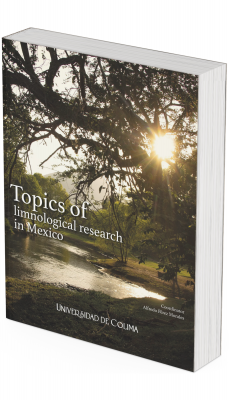
The relevance of aquatic bodies on global biogeochemical cycles has been recently highlighted. Thus, limnological research is increasingly needed to improve the models of ecosystems functioning. We also need to face Climate and Global Change. As the information on tropical systems is still scarce, tropical limnology is providing interesting elements to understand ecosystem’s responses to environmental change. Particularly relevant are long-term monitoring efforts. Here we revise recent research on tropical limnology of aquatic ecosystems of Mexico that contribute to understand emergent and complex challenges in a panorama of water crisis, particularly, the rise of temperature and increased eutrophication, Our analyses showed long-term, interdisciplinary monitoring of ecosystems of the Mexican highlands are providing novel findings that contribute to global research questions in areas like: community metabolism and carbon dioxide fluxes, physical forcing, water-level fluctuations, internal proceses that affect vertical nutrient exchange, biodiversity, phytoplankton ecology, eutrophication progressions, plankton interactions, and phytoplankton blooms. This research contributes to the understanding of eutrophication and oligotrophication under warming scenarios, as well as aims to provide elements to mitigate and adapt to the increasing drought, and water crisis in Mexican territory.
Downloads
Pages
Published
Series
Categories
License

This work is licensed under a Creative Commons Attribution-NonCommercial-ShareAlike 4.0 International License.